Many people believe emotions simply happen to them.
They think anger, fear, frustration, or anxiety appear automatically and are impossible to influence.
In reality, most emotional reactions are learned through repetition, past experiences, and unconscious conditioning. Over time, these patterns become so familiar that they feel like part of our personality.
Understanding how emotions are trained is the first step toward changing them.
For many years, I lived on autopilot, action, reaction.
This meant that someone said something, someone did something, and my behavior and emotions were purely reactive.
If someone cut me off on the road, I honked.
If someone told me I hadn’t done something well, I fought back and tried to prove my point.
If someone said that a certain situation was like that, I resisted it and argued against it.

My reactions were constantly responses to the outside world, and it took me a very long time to start looking for my answers and my reactions in a different way, in the sense of action, not reaction.
That they are mine.
That my life is my own, not reactive.
The Moment I Realized My Emotions Were Trained
You think your emotions just happen. That they come and go. That you either control them or you don’t. But that’s not what is really happening.
I saw this in a very simple moment.
Nothing dramatic.
No crisis.
Just a conversation.
Someone said something positive.
“You’ll succeed.”
No pressure.
No attack.
No reason to react.
And still, something inside tightened.
Not visible from the outside.
But very clear inside.
There was resistance.
Almost irritation.
For a second, even anger. Because how do you know I will succeed? Are you in my situation? Or easy for you to say. You don’t have to do it (the exam, new job project,…)
In a way that didn’t make sense.
Because the words were not the problem.
The reaction was.
And that was the moment I started seeing something differently.
This was not random.
This was not “just how I feel.”
This was trained.
Built over time.
Repeated so many times
that it became automatic.
And once you see that,
You can’t go back to thinking
Your emotions just appear.
They don’t.
They are the result of everything
You have been repeating.
For years.
Emotions Are Learned Through Conditioning
Most people think emotions are reactions.
Something happens.
You feel something.
You react.
It looks simple.
But it’s not.
What you feel is not created in that moment.
It is triggered.
There is a difference.
The situation is just the spark.
The emotion is already there.
Waiting.
Built over time.
Through repetition.
Through experience.
Through interpretation.
Every situation you went through
left something behind.
A trace.
And that trace becomes a pattern.
You don’t see it.
But you feel it.
In similar situations.
With similar people.
With similar words.
With similar pressure.
The reaction feels new.
But it isn’t.
It is familiar.
That is why it is so fast. There is no thinking. No pause. No distance. Because the system recognizes it immediately. And responds.
Automatically.
And this is where most people make the mistake. They try to change the reaction.
Control it.
Stop it.
Suppress it.
But the reaction is not the problem. Reaction si the consequence. The real system is underneath. And that system is trained.
Not once.
But thousands of times.
Quietly.
And that is why it feels like “this is just who I am.”
But it isn’t. It is what you repeated. And what you repeat becomes automatic.
H2: Emotions Are Trained Through Repetition
Emotions are not something that just happens. They are built over time, through repetition, through experience.
Most people don’t see this.
They think emotions are random.
But they are not.
They follow structure.
Emotional Patterns Begin in Early Childhood
From a very early age, practically from birth, a person begins to learn how to think and how to react emotionally. Even before a person is aware of their own existence, they are already receiving patterns and signals from the environment.
For example, when a child cries, they receive a certain response from their parents.
When a baby smiles, they notice others smiling back. Sometimes children become afraid of things like glasses or unfamiliar objects, and that fear comes from somewhere.
Some children are very afraid of animals.
From the very beginning, a person starts collecting information from the environment and interpreting it internally.
In the same way, this affects the body. It changes its reactions.
The same way skills develop.
The same way habits are formed.
The same way patterns repeat.
I have seen this very clearly in practice.
Not in theory.
In real life.
When I started learning different things at the same time, the difference became obvious.
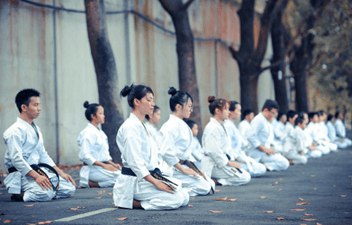
For example, I started practicing tai chi and, through gradual training, achieved significant results.
On other occasions when I wasn’t consistent (playing guitar), the system and training collapsed, and I stopped playing.
In the first matter, there was consistency.
Small effort.
Regular.
Repeated.
On the second matter, there was an interruption.
Less structure.
Less continuity.
Less repetition.
The result was completely different.
Not because of talent.
Not because of intelligence.
Because of repetition.
Something done even once a week over a longer period creates results.
Something done intensively without continuity disappears.
The system follows what is repeated.
Not what is intense.
And the same applies to emotions.
What you repeat internally becomes your emotional response.
Not immediately.
But over time.
You don’t notice it in one situation.
But you notice it in patterns.
The same reaction.
In different situations.
With different people.
That is not a coincidence. That is training. And the question is simple.
Are you aware of what you are training?
Or are you repeating the same patterns without seeing them?
H2: Consistency, Not Intensity, Changes Your Emotions
Most people look for change in intensity. Big decisions, strong effort, fast results. But that is not how systems change.
Real change is quiet.
It happens slowly.
Through repetition.
Through consistency.
This is where most people fail.
Not because they don’t know what to do.
Not because they are not capable.
But because they don’t stay with it.
They start strong.
Motivated.
Focused.
Clear.
And then something small shifts.
A bad day.
Less energy.
Less focus.
And the rhythm breaks.
Not dramatically. Just enough to stop. And once the rhythm is broken, everything feels harder.
Not because the system disappeared.
But because the connection to it changed.
And the feeling is no longer the same.
And people follow the feeling.
Not the structure. That is the mistake. Because the system does not follow motivation.
It follows repetition. Even small actions. Even minimal effort.
Done consistently.
Changes the system.
Not instantly. But inevitably. And the same goes for emotions.
You don’t change how you feel in one moment. You change it over time.
By what you repeat.
By how you respond.
By what you allow to continue.
And slowly, something shifts.
What once triggered you
What once created tension.
What once stopped you
Becomes neutral.
Or disappears.
Not because you forced it. But because you trained something different. And that is the difference.
Between reacting. And building a system.
H2: What You Repeat Becomes Who You Are
What you repeat does not stay small. It grows quietly.
Of course, if you track your progress, you will also be able to see it.
The more aware you are of your progress, the more you plan it, and the more clearly you set your goals, the higher the probability that you will achieve the results you want.
As Robin Sharma said, “The things that get planned are the things that get done.”
That is why, whenever possible, do a daily review, plan your actions, visualize, and imagine how you will achieve your results. With minimal daily effort, you will achieve significant results over time.
Every reaction you allow.
Every pattern you follow.
Every thought you don’t question.
Becomes stronger.
H3 Which “wolf” do you feed?
Therefore, feed the wolf you want to become.
Do not feed wolf of anger, reactive behavior, or impulsive responses.
Instead, feed the part of you that creates calm, stability, and awareness.
Feed the wolf that allows you to respond consciously, not automatically.
And over time, repetition becomes your identity.
You don’t say, “this is a pattern.”
You say, “This is me.”
That is the shift.
From behavior.
To identity.
And that is why change feels so difficult.
Because it no longer feels like changing a reaction.
It feels like changing yourself.
And most people don’t want that.
They stay inside what is familiar.
Even if it is uncomfortable.
Even if it limits them.
Because it feels known.
And the unknown feels unstable.
So they repeat.
The same reactions.
The same patterns.
The same emotional responses.
Again and again.
And over time, it becomes automatic.
Not visible.
Not questioned.
Just normal.
And this is where the trap is. You think you are choosing. But you are following. Following what has already been built. Through years of repetition. Through moments you didn’t notice.
And until you see that clearly, nothing changes.
Because you are not working with the system.
You are inside it. And once you start seeing it, even a little. Something shifts. Not outside.
Inside.
H2: Where Change Actually Starts
Most people wait for the right moment to change. More time, more energy, better conditions. But that moment rarely comes.
Because change does not start outside.
It starts in a very small moment.
When something happens.
You feel something.
A reaction starts.
And you usually follow it.
Automatically.
But sometimes, very rarely at the beginning, there is a pause.
Small.
Almost invisible.
Just enough to notice.
Not to change anything.
Just to see.
What you felt.
What started.
Where it was going.
And that changes everything. Because for the first time, you are not fully inside the pattern. You are observing it. And that creates space.
Very small at first. But real. And in that space, something new becomes possible.
Not perfect control.
Not a different reaction immediately.
But awareness.
And that is where change actually begins.
Not in big decisions.
Not in motivation.
But in these small moments.
Seen.
Repeated.
Strengthened.
Stabilized.
And over time, that becomes your new pattern.
Not forced.
Not artificial.
But natural.
Because what you repeat becomes who you are.
Again.
How to Train Healthier Emotional Patterns
Notice Your Emotional Triggers
Most emotional reactions happen automatically. Learning to recognize the trigger is the first step toward changing the pattern.
Create a Pause Before Reacting
A few seconds of awareness can interrupt years of conditioning.
Repeat the Response You Want
Every conscious response strengthens a new emotional pathway.
Accept That Emotional Change Takes Time
Your emotional habits were built over years.
They will also be rebuilt through consistent practice.
Practice Awareness Every Day
Emotional mastery is not created during rare life-changing moments.
It is developed in everyday situations.
Where Change Actually Starts
Nothing will change if this stays an idea.
If this becomes something you agree with, but don’t observe in real life. Because your patterns are not abstract. They are happening now.
In your reactions.
In your decisions.
In the moments you don’t question.
And that is where most people lose.
Not because they are not capable.
Because they don’t see.
They keep repeating.
The same reactions.
The same emotional responses.
The same patterns.
Just in different situations.
And years pass like that.
Quietly.
Without real change.
And here is the part most people avoid. You are training your emotions every day. Whether you see it or not. With every reaction.
With every avoidance.
With every repetition.
You are building your system.
The question is not if you are changing. You are. The question is in which direction. And that is where things become real. Because the moment you start seeing what you repeat, you begin to see what you are becoming.
And once you see that clearly.
You can’t ignore it anymore.
REMEMBER:
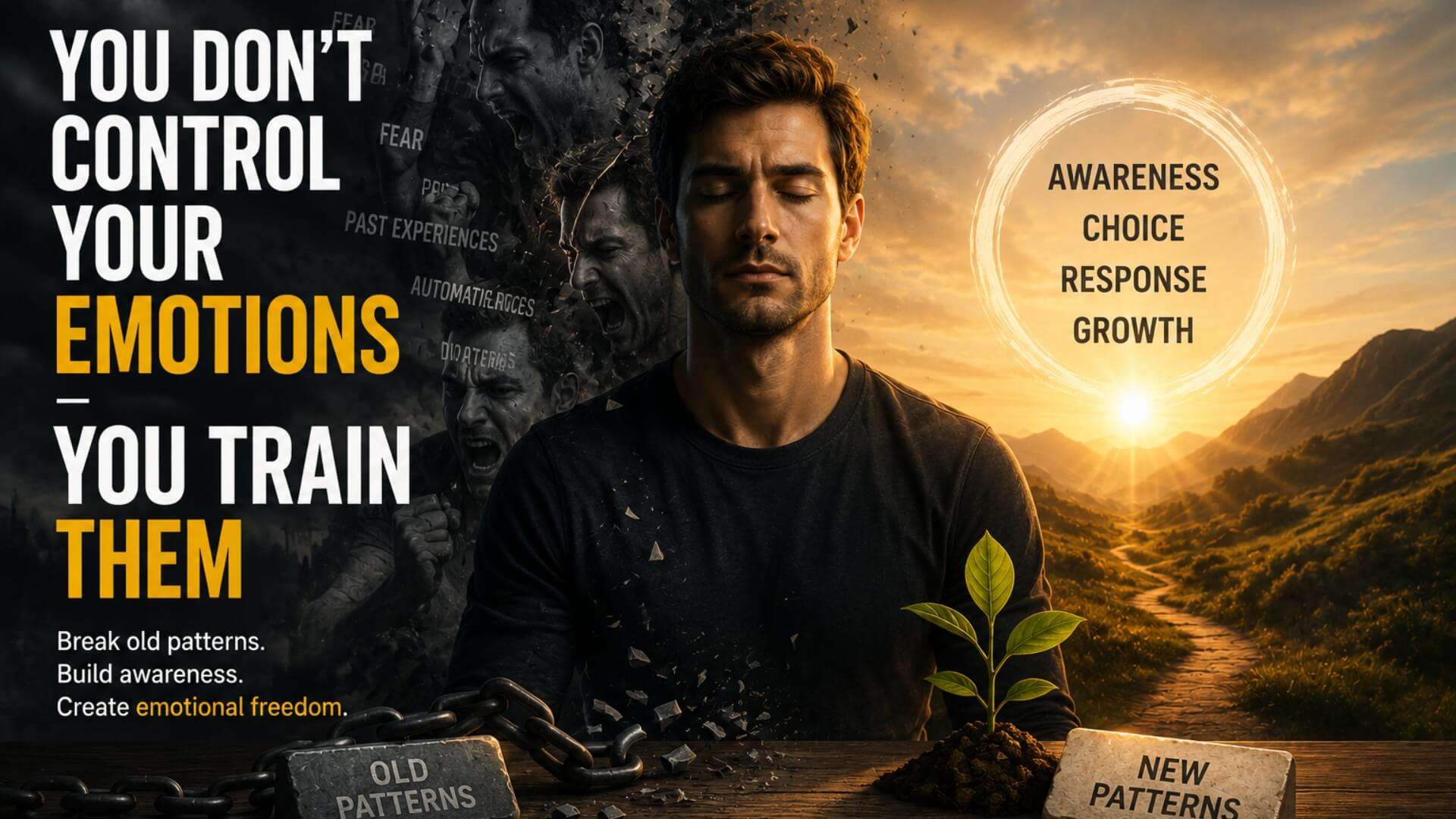
You don’t control your emotions.
You train them.