Understanding Self-Sabotage in One Minute
- Most people do not sabotage themselves because they do not want success.
- They sabotage themselves because another part of them wants safety, comfort, and familiarity.
- Self-sabotage rarely appears in obvious ways.
- It usually shows up as procrastination, excuses, perfectionism, and overthinking.
- Many behaviors that hold us back today once served as protection mechanisms.
- Real change begins when we recognize the hidden conflict between conscious goals and subconscious patterns.
Why People Work Against Themselves
Self-Sabotage Rarely Looks Like Self-Sabotage
People usually think that self-sabotage is something dramatic.
They think it means that someone does not really want success, lacks discipline, or simply does not want to change enough.
But in reality, things are often very different.
Most people genuinely want change.
They want a better relationship, a healthier body, more peace, more money, less stress, or a better life.
The problem is that another part inside them often wants something completely different.
It wants safety.
Comfort.
Familiarity.
Predictability.
And this is where an internal conflict begins.
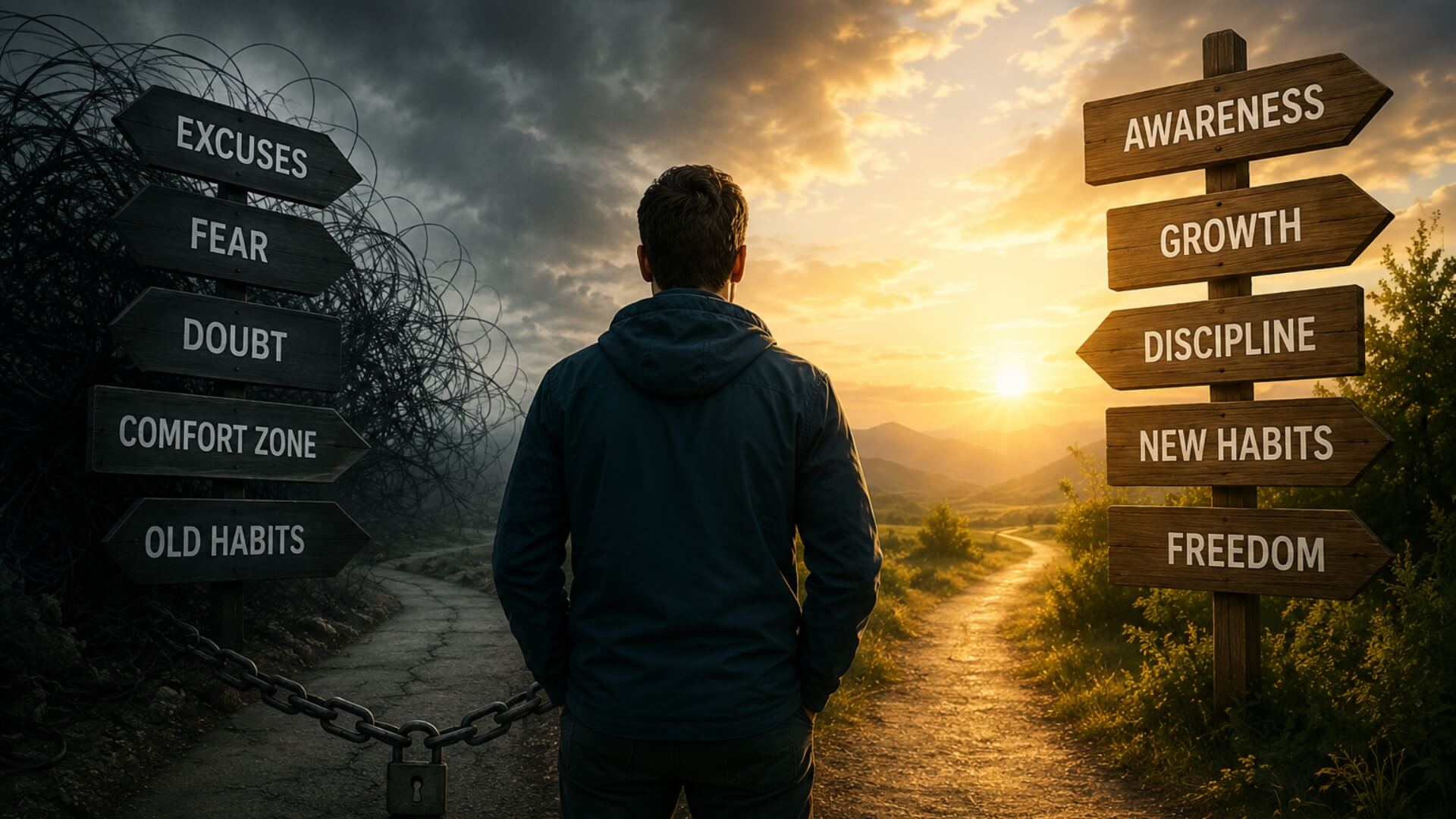
The conscious part says, “I want change.” But something deeper inside says, “Stay where you are. Stay where things are known and safe.”

The interesting thing is that self-sabotage rarely appears in an obvious form. People usually do not wake up in the morning and say, “Today I will destroy my chances for success.” It appears in much smaller and quieter ways.
It appears as procrastination. As excuses. As perfectionism. As overthinking.
People say things like, “I will start next week.”
“This is not the right moment.”
“I just need a little more time.”
But very often, this is not really about time, discipline, or ability. It is about internal resistance.
And perhaps this is the most important thing to understand.
Many people are not trying to destroy their lives. Very often, they are trying to protect themselves. The problem is simply that the mechanisms that once protected us can later become the same things that keep us trapped.
Something that once helped us survive can eventually stop us from growing.
That is why self-sabotage is often not a question of discipline. It is a question of awareness.
In this article, we will look at why people work against themselves, why they return to old patterns, and why understanding the hidden conflict inside us can change everything.
Why Familiar Pain Feels Safer Than Change
The biggest problem with the subconscious mind is that it does not search for happiness.
It does not search for growth.
It does not search for what is good for us. It does not search for comfort.
The subconscious is an autopilot program that functions almost like a computer, and it is a very difficult computer to manage.
And even though this subconscious computer very often works against us, its main purpose is actually to protect us.
How the Subconscious Protects You, And Holds You Back
The problem is that while it protects us, like any medicine, it also comes with certain side effects.
If we do not understand what exactly was protected and what side effects appeared, then we have a big problem.
What often happens is that we continue to stay in pain simply because it feels easier.
It feels familiar.
It feels predictable.
And over the years, we have become used to it.
Human beings are probably the most adaptable creatures on this planet. We are willing to adapt even to terrible situations that no animal would tolerate.
Why People Stay in Toxic Relationships and Unhealthy Situations
That is why people stay in abusive relationships.
They stay in workplaces where they experience mobbing.
They stay in schools and communities where they are bullied, shamed, humiliated, and constantly put down.
People stay in relationships where they are physically abused and treated badly, and so on.
And many times, they stay for one reason only.
Their subconscious system has developed a pattern that appears safe and predictable.
But in reality, over the long term, that same pattern slowly destroys them.
The Ego Protects Identity, Not Growth
On the other hand, the ego protects our identity and the sense of I-ness.
The ego draws its power from many different stories, including stories from the subconscious mind. Similar to the subconscious itself, the ego protects our identity. In the end, it also protects itself.
The ego wants to be seen. It wants to be heard. It wants to be recognized. It wants to be unique.
The ego wants recognition in the world.
It wants importance.
It wants the feeling of: “Do you know who I am?”
All of us have found ourselves in situations where we wanted to say, “I will not allow you to do this to me.”
Or:
“I will not accept this.”
Or simply:
“Do you know who I am?”
Meaning, I refuse to be treated this way.
This is where the ego receives enormous power.
And here the ego is ready to use everything from the past. Business experiences. Sports activities. Courses. Seminars. Everything it has learned throughout life.
Everything it has learned in its past will be used to demonstrate its strength.
The ego battles constantly for its survival
And this is where battles of ego against ego begin.
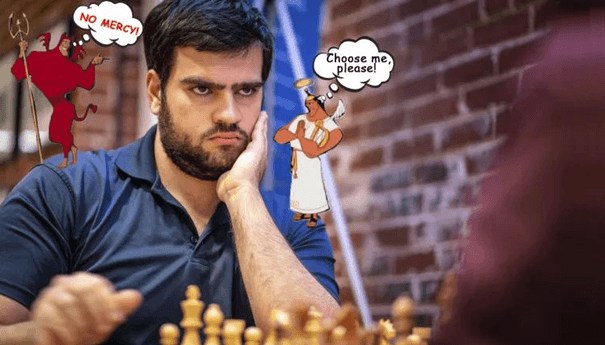
Of course, this ego identity usually becomes more harmful than beneficial.
Even if it appears from the outside that the ego achieved something it wanted, that does not mean it was actually good for the person.
You can tell your boss to go to hell. You can insult him. For five seconds, the ego feels good.
Then, in the next second, you begin to realize that because of that reaction, you lost your job.
And it was the ego’s reaction that created it.
So, more often than not, the ego leads to self-sabotage.
Because the ego is connected to emotions.
Emotions are connected to the amygdala.
And the amygdala is connected to survival.
The amygdala operates through the same survival instinct and subconscious automatisms that we discussed earlier.
And this process needs to be interrupted.
How to Interrupt This Automatic Subconscious Process?
Slowly.
Systematically.
And with great patience.
Nothing will happen overnight.
You have to understand that you are operating inside your own ego.
At the beginning, all you can really do is recognize where the ego damages you.
Awareness.
And in the second phase, through discrimination, you slowly begin to resist it.
Or better said, you stop sabotaging yourself in situations where the pain comes from the ego itself.
The ego does not allow growth.
For this reason, it is almost impossible to expect that the ego, whose task is to protect your identity and safety at all costs, will also work in the best interest of your personal growth.
Personal growth very often means going through pain rather than avoiding it.
The task of the ego is to protect you from pain.
So you can clearly see that ego and personal growth are often in direct conflict.
The ego takes care of safety.
Growth wants to teach you that you no longer need that protection from the ego.
You probably needed it at some point, especially in younger years, when many of these mechanisms were developed.
But in adulthood, many of them are no longer necessary.
And discrimination allows growth.
Because discrimination of the mind tells you that certain pain can be surpassed, overcome, and dissolved.
As a result, the ego slowly loses its power and importance.
And because of that, the ego will constantly resist.
The Resistance of the Ego Until the End
For this reason, the ego will always favor safety and predictability.
And it will be very difficult to go beyond it.
Its task is clear, and its power is enormous.
You will not get rid of it easily, especially because it is so deeply rooted within you that most of the time, you are not even aware of it.
And that is why we constantly need to stay alert and observe what comes from the ego and what comes from our true self, the part that knows what is truly good for us.
And what truly benefits us is personal growth.
Why Do People Return to Old Habits?
Over time, people begin to realize that their habits, reactions, and even their lives have become exhausting and difficult, and are connected to internal battles they cannot fully understand or identify their origins.
It works something like this.
Why Treating Symptoms Never Solves the Problem
People know they have a headache, and they want to cure it, but they keep treating the headache with tablets, painkillers, or with different old habits that give them a temporary solution rather than removing the root cause of the problem.
Just like with a headache.
For example, a tension headache can originate from a tense neck and shoulder area. A person can take a painkiller, and the pain temporarily disappears.
Or they can go for several massages and at least temporarily relieve the cause of the tension headache.
Similarly, people returning to old habits are very often returning to old pain, which we mitigate with temporary ego-survival solutions.
And as we mentioned earlier, these old pains are managed through temporary safety valves created by the ego or the subconscious mind, which, over the long term, sabotage the person’s life and health.
Because it is so difficult to move beyond ego pain and to create change in habits, we return to old habits.
There is almost always some rational reason why we do not stop smoking or why we remain in abusive relationships.
The reasons can be financial. Survival-related. Dependency-related.
And these are very legitimate reasons.
But at the same time, they give the ego confirmation that it is acting correctly by not leaving the crisis situation.
The ego will always tell you:
“You already know that here you are safe. On the other side, you do not know what is waiting for you.”
Why the Ego Pulls You Back Into Old Habits
For example, if a person leaves an abusive relationship, for some time, they will face very uncomfortable and unpredictable situations.
The Ego will say.
You do not have enough money.
You do not know how you will find a new apartment.
You do not know how you will survive.
You do not know how you will handle all the pressure emotionally.
Even unhealthy partnerships create a feeling of connection, love, and safety.
So there is a physical problem, and how to survive on a practical level.
And there is an emotional problem, how to survive emotionally.
These are difficult things to simply walk away from.
And the ego will always find certain reasons, rational reasons, logical reasons, sometimes even incorrect reasons, which give you a rationalization to return to old habits.
And most likely, you will return to old habits.
This is where the saying comes from:
“Old habits die hard.”
Personally, I would add:
“Old habits die extremely hard.”
Only when you begin to realize how much needs to be done and how difficult this change actually is, can I tell you, from personal experience, that it often feels like the work of Sisyphus.
What Is the Main Problem With Change?
The biggest problem with change is the unknown.

Inside the unknown, there is anxiety.
Pain.
Fear.
And many other unpleasant emotions.
The unknown is something people are generally unprepared for and dislike.
Some tolerate it better.
Others tolerate it worse.
But in every case, the unknown is exactly where the ego will continuously pull you back into the same old patterns.
How to Stop Working Against Yourself
We have already started pointing to where all of this begins.
Just like with many other things in life, by simply reading this article, something has obviously already moved inside you.
Some realization.
Some understanding.
Because somehow you arrived at this article and decided to read it.
Awareness is definitely the first step.
That you want to change certain things, certain habits, certain old patterns that no longer fit who you are becoming.
And that is already the first step.
It takes a lot of courage and strength to begin walking on that path.
So first of all, you deserve credit for that, even though it is probably not something you are looking for right now.
But compassion toward yourself is also the second step.
You managed in life what you managed. You survived what you survived. And you arrived where you are today.
Be grateful that you read this article and that you are trying to help yourself.
Because even for that, courage was necessary.
Become aware of your repeating patterns
- Stop treating symptoms and search for the root cause
- Replace old habits slowly, not forcefully
- Learn to sit with discomfort instead of escaping it
- Build a new identity slowly through repetition
1. Become Aware of Your Patterns
Start observing where the same reactions keep appearing. The same conflicts. The same partners. The same habits. The same fears.
Very often, people believe that life keeps giving them bad luck. Bad partners. Bad situations.
Bad people.
But many times, the pattern repeats itself because something inside us does.
If you see yourself returning to the same emotional reactions, the same pain, or the same situations over and over again, do not immediately blame the outside world.
Pause for a moment and ask yourself a simple question:
“Why does this situation keep appearing in my life?”
Awareness is always the first step. Because you cannot change something you cannot see.
You cannot fight an enemy that remains invisible.
2. Stop Treating Symptoms and Find the Root Cause
Very often, we spend years treating symptoms instead of treating causes.
We try to remove stress through distractions. We try to remove pain through habits. We try to remove fear through temporary solutions.
But symptoms are often not the problem.
The problem is hidden somewhere deeper.
The cigarette may not be the problem. The food may not be the problem.
The endless scrolling, the anger, the emotional reactions, or the need for validation may not be the problem either.
Very often, they are simply painkillers.
And painkillers never remove the root cause.
3. Replace Old Habits Slowly
People often try to change everything in one day.
Tomorrow I will stop smoking. Tomorrow I will train every day. Tomorrow I will become a completely different person.
Usually, it does not work like that.
Old habits were built over years and decades.
You have to find a new habit to replace an old one.
Otherwise, you will fail.
If you smoke, quit and start eating carrots, running, or walking. You want to stop drinking coffee and start drinking tea, water, and juices.
Always search for something healthy to replace old bad habits.
Take time, start small, and be patient with relapses.
They will happen, and that’s ok.
4. Learn to Sit With Discomfort
This is probably one of the hardest things for human beings.
The moment discomfort appears, we immediately want to escape.
We pick up the phone. We open social media.
We eat.
We drink.
We distract ourselves.
We go back to old reactions.
Don’t do that. Just stay with discomfort.
It will usually last less than an hour. Remember that.
And it will happen a lot in the beginning, but gradually it will be less and less.
5. Build a New Identity Slowly
In reality, you are not changing only habits.
You are changing yourself.
You are changing the way you think, react, behave, and live.
And identity does not change in one moment.
It changes through repetition.
Through hundreds of small actions that slowly begin to tell your mind:
“This is who I am becoming.”
Eventually, the new behavior stops feeling forced.
It becomes part of you.
How to Stop Self-Sabotage in Daily Life
Recognize Your Triggers
Notice which situations repeatedly activate fear, avoidance, or excuses.
Patterns become easier to change once they become visible.
Replace Avoidance With Small Actions
Instead of waiting until you feel ready, take one small step.
Action weakens the cycle of self-sabotage far more effectively than endless planning.
Accept Discomfort as Part of Growth
Growth often feels uncomfortable because it requires leaving familiar patterns behind.
Discomfort is not proof that something is wrong.
Very often, it is proof that something is changing.
Build Trust Through Consistency
Every small promise you keep to yourself weakens old subconscious patterns.
Self-confidence grows when your actions repeatedly confirm that you can rely on yourself.
Start your journey NOW
Don’t wait or prolong it till tomorrow.
Tomorrow will never come.
Start small, start today.

If you would like to walk this path, or even part of this path with me, feel free to contact me.
I’ll be happy to help.