
More than a decade ago, I was sitting with two friends. One of them was slightly older and clearly wiser than I was at the time. He asked me how I was doing, and I answered honestly:
“I’m lost, confused….”
And he replied:
“That’s good.”
At that moment, my confusion only became bigger.
Then he immediately continued and said something I never forgot:
“If you know you are lost, at least you know you are on some kind of path. At least you know certain things need to change.”
Until that moment, I had never looked at being lost or confused that way.
The simple fact that you feel lost, confused, uncertain, or emotionally disconnected is already information. It means something inside you has begun to notice that the old way no longer works.
At the time, I did not fully understand what he meant. I needed several days to absorb it. He was a man of very few words and did not explain much. But you could see he knew what he was talking about. You could feel there was experience, wisdom, and some deeper understanding behind those words.
And that was the moment my search started in a more concrete way.
So if you are currently in that place, or have been there for a longer period of time, then let me tell you the same thing:
This is good.
Not because confusion feels good. It usually does not.
Human beings are not naturally comfortable with uncertainty. Feeling emotionally lost, disconnected, or directionless can be anxious, painful, and deeply uncomfortable.
But reaching that point often means you have arrived at an important stage of life. A point where meaningful growth becomes possible.
The Moment You Realize Something Feels Wrong
For me, the moment I realized something was wrong probably developed slowly over time. But the moment I consciously realized that things were no longer okay came after I achieved several major life goals.
I reached material success. I completed my doctorate. From the outside, everything looked successful and stable.
And then, strangely, my life stopped.
You can read more about that experience here:
My Life Stopped When I Achieved Peak Success
Looking back today, I would say the process had been building internally for years.
At some point in life, people slowly begin to realize that something is missing.
Usually, this happens after the age of thirty or forty, sometimes earlier, sometimes later.
Very often, these are people who are disciplined, structured, educated, and organized. They have careers, routines, families, responsibilities, income, maybe even above-average success.
Why does this happen to “good people”?
But despite all that, a certain emptiness slowly begins to appear.
A quiet feeling that something important is missing.

Richard Rohr talks about this through the idea of:
- order,
- disorder,
- and reorder.
When you are young, you often live in “order.”
Everything feels clear. You think you understand the world. You feel certain about life and yourself.
Then, usually later in adulthood, “disorder” begins.
You start realizing things are more complicated than you thought. Certain structures stop working. Old beliefs begin collapsing. Internal confusion appears.
And hopefully, after going through that process consciously, you eventually arrive at “reorder.”
A more mature stage of life shaped by experience, humility, wisdom, and deeper understanding.
If you are reading this article and something in it resonates with you, you are probably somewhere in that disorder phase.
And although disorder can last a long time, it is important to understand one thing:
If you are aware that you are in the process, then things are probably moving in the right direction.
You can read more about it here.
When Life Looks Fine From the Outside, But Feels Empty Inside
From the outside, life can look completely fine.
And that is exactly what makes this stage so confusing.
If you try to explain your feelings to some people, they may respond with things like:
“But everything looks great.”“What exactly are you missing?”“You should be grateful.”
And many times, people say these things not because they are bad people, but because they themselves are uncomfortable with pain, uncertainty, and existential questions.
On a subconscious level, they are afraid that the same thing could happen to them.
Friend with cancer
A good example was a friend of mine whose best friend died from a very aggressive form of cancer.
After the funeral, she could barely talk about it.
Much later, she admitted that the fear became so strong that she could not emotionally handle conversations about illness or death anymore. Her friend originally went to the doctor because of a relatively small pain in her arm, and within months, she was gone.
My friend became terrified that the same thing could happen to her or her family.
So she emotionally shut down.
This is important to understand because many people simply cannot carry heavy emotions, uncertainty, or deep existential conversations.
And that is okay.
You just need to understand that during this period of your life, you may not receive much support from the outside world.
And knowing that in advance can actually help you.
Why So Many People Drift Through Life Without Noticing
There is also something important and strangely comforting about the fact that you noticed this at all.
Because many people never do.
They move through life almost entirely on autopilot.
Days pass.Weeks pass.Years pass.Sometimes decades pass.
And they never truly stop to ask themselves:
- Why am I living this way?
- What matters to me?
- Who am I becoming?
- Is this actually my life?
In some ways, autopilot is easier.
There is an old saying:“What you do not know cannot hurt you.”
And there is truth in that.
People who never question anything often avoid certain kinds of existential pain.
But that does not mean they are free from suffering.
They still experience frustration, anxiety, emotional emptiness, anger, failed relationships, burnout, addictions, emotional shutdown, aggression, or deep dissatisfaction.
The difference is that many of them never become fully conscious of what is actually happening inside them.
So they blame the world.They blame their partners.Their jobs.Politics.Society.Other people.
But they rarely realize that much of what they experience internally also comes from themselves.
That is why I cannot tell you that what you are currently experiencing is bad.
Painful maybe.Confusing maybe.But not bad.
Because you may actually be arriving at a completely new stage of life.
What is the purpose of life?
Many people search for a purpose in life that would finally give them direction.
I went through that phase myself for many years.
I listened to different teachers and thinkers, including Sadhguru, trying to understand what purpose really means.
I remember once hearing him say that searching for “the purpose of life” can itself become the wrong question.
He was speaking more from a spiritual perspective, but there is still truth in that idea.
Because the answer to your purpose cannot ultimately come from another person.
No one can tell you what your purpose is.
I have my own understanding of purpose.You will have yours.
But I can say this:
The purpose of life is probably not just going to work, paying bills, following routines, going on vacation twice a year, and repeating the same cycle for decades.
Material success alone is also not enough.
Money, status, titles, achievements, and external success may improve your quality of life, but they rarely create deep meaning by themselves.
And personally, I believe something else is also true.
Real purpose usually moves beyond pure ego.
It starts shifting toward contribution, responsibility, service, helping, guiding, protecting, creating, or supporting something beyond yourself.
Sometimes that begins with your family.Sometimes with your children.Sometimes with close friends.And sometimes with complete strangers.
Helping another human being without expecting anything in return can create an enormous sense of meaning.
When your inner purpose dies completely
I remember a friend of mine whose life completely collapsed at one point. She was emotionally close to suicide.
Then one day, while near the sea, she helped save the life of a fisherman who suffered a heart attack on a boat.
And something inside her changed.
At that moment, she felt that her own existence still mattered.That her time on this earth was not finished.
Not everybody will experience such dramatic moments.
But many people begin discovering meaning through small acts of service, responsibility, honesty, protection, guidance, or helping others.
Because true meaning in life often appears more through giving than through taking.
And one more thing.
When you truly find something that deeply feels like your path, you will probably know it.
Not intellectually.Not theoretically.But internally.
There will be a certain clarity behind it.
And until then, humility is important.
Do not expect that your purpose has to be world-changing or heroic.
You do not need to “save the world.”
A meaningful life can also be built quietly, honestly, and through the way you treat the people around you every single day.
Most People Do Not Need a New Life, They Need Clarity
The problem usually begins internally.
Most problems exist within us and are solved within us.
Of course, external situations create the feeling that they are the cause of our suffering or confusion. But many times, those situations are only triggers, consequences, coincidences, karma, cause and effect, or whatever you personally choose to define them as.
What usually happens is that old internal patterns become activated through external situations.
An external trigger activates an internal trigger.
And then it feels as if the outside world is responsible for our emotional state.
But in reality, this is rarely the case.
Most of the time, our reactions are deeply connected to our internal perception of the world and to what we were taught, experienced, and emotionally conditioned to believe throughout life.
I didn’t understand people
Many times in my life, I did not understand certain people or situations.
I asked myself:Why would somebody whom I have never harmed be rude, aggressive, cold, or unpleasant toward me?
And I analyzed situations endlessly.
I overanalyzed conversations, moments, reactions, and details.
What did I do wrong?Why did they behave that way?What exactly happened?
And still, I could not fully understand it.
The same happened with external life situations.
Why did I break my leg or arm?Why did I have a car accident?
And, interestingly, these things happened many times exactly when life was going well.
As if something suddenly had to destroy the good moment.
Other times, things happened when life was already difficult, and then somehow became even worse.
Like Murphy’s Law.When you think things cannot get worse, they somehow still do.
For a long time, I was focused almost entirely on external circumstances because I could not understand one very important thing:
The outside world is different from me.
We project ourselves onto other people.We assume others think, feel, react, love, fear, and experience life the same way we do.
And intellectually, we understand that people are different.
But emotionally, that is often very difficult to accept.
Example
For example, if I asked most people whether they would have a problem with their partner sleeping with other people, the majority would say yes.
And yet there are people who genuinely function well in open relationships.
Most people immediately think:“That cannot be real.”“There must be manipulation behind it.”“They are lying to themselves.”
But that is not necessarily true.
People are different.We come from different backgrounds.Different emotional structures.Different beliefs.Different needs and desires.
And sometimes it is extremely difficult to truly accept how different another human being can be.
That is why it is important to stop assuming that the world is built according to your own emotional structure and your own understanding of reality.
The world does not revolve around us.
And many people unconsciously live exactly as if it does.
They expect life, relationships, situations, and people to function according to their internal expectations.
And when reality fails to meet those expectations, suffering begins.

Real Direction Usually Starts With Honest Self-Reflection
So where does the search for clarity actually begin?
Inside ourselves.
- There are many answers hidden in silence.The problem is that most people cannot tolerate silence for very long.
- Another important tool is journaling.
- Then come reflection exercises, awareness, calming the nervous system, and learning how to slow down.
- What is the perfect direction?
- What is the perfect purpose?
- What is the perfect decision?
Try sitting quietly for five or ten minutes without distraction, without planning the next part of your day, without checking your phone, without escaping mentally somewhere else.
For many people, this is surprisingly difficult.
To sit quietly and think about yourself, not about the external world, but about your own internal state, fears, pain, confusion, or direction, is both a challenge and a blessing.
Writing down thoughts, emotions, patterns, questions, and observations.
These are often the first real steps toward finding direction and clarity in life.
Life’s Purpose Is Built Slowly Through Action
Action is one of the few things that truly move us forward.
It is not so important that every action is perfect.
Many people spend years overthinking:
And in the end, they do nothing.
What matters most is movement.
The road will not be straight.It will be difficult.Sometimes steep.Sometimes painful.There will be ups and downs.
But movement matters.
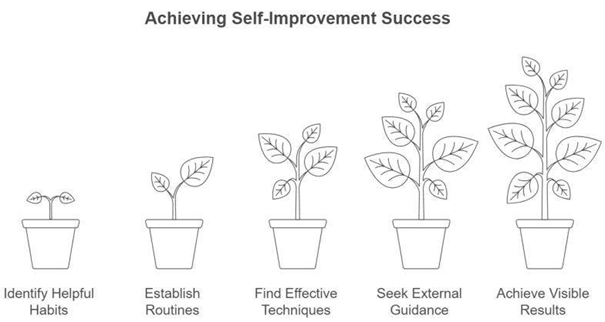
Small Consistent Actions Change the Way You See Yourself
One of the biggest mistakes people make is waiting too long before they begin.
Remember:
Dream big.Start small.Act now.
That principle matters enormously.
Create a vision for yourself.But begin with small steps.
Do not try to jump across the entire ocean in one move.
Take your time.Move slowly.Move consistently.
And over time, through repetition and persistence, your direction slowly begins revealing itself.
Where to start
Today, there is an enormous amount of material available:
- books,
- videos,
- courses,
- coaching,
- conversations,
- mentors,
- free educational content,
- paid programs,
- one-on-one guidance.
Whether you have money or not, progress is possible.
Of course, targeted help and structured guidance can significantly speed up the process.
But many people have transformed their lives with nothing more than discipline, consistency, a computer, and internet access.
So excuses become harder and harder to justify.
Yes, the path may be slower.But it is still your path.
And there is usually a reason why life unfolds the way it does.
Meaning Often Appears After Movement, Not Before It
People often wait for one giant “aha moment.”
But clarity usually emerges during the process, not before.
And many times, we already have partial clarity, but we only recognize it later when we look back.
That is why reflection and journaling are so important.
You must compare who you are today with who you were six months, a year, or several years ago.
Only then do many people begin realizing that change has actually been happening all along.
And slowly, over time, things begin to become clearer.
Then new challenges appear.New layers.New questions.New directions.
And this process continues for as long as it needs to.
If you do not quit, eventually there may come a moment when things begin connecting in a much deeper way.
A moment where your purpose becomes clearer.
A moment where you realize you have arrived at a completely new stage of life.
But if that purpose is truly meaningful, it usually will not be easy.
How to climb Mount Everest

It is almost like realizing that, before, you were climbing small hills, but suddenly discovering where Mount Everest actually is.
And now you understand the scale of the journey ahead.
Or like realizing you must cross an ocean you never believed you could survive.
These goals often appear beyond our imagination of success.
But very often, that feeling is only a limiting belief.
An internal illusion created by fear and self-doubt.
And one more important thing:
The goal of life is not reaching the final destination.
The goal is the path itself.
Do not confuse the path with the destination.
Otherwise, you become like a hamster running endlessly inside a wheel, constantly chasing something without understanding why.
Direction and purpose are deeply connected.
Direction slowly helps you discover purpose.And purpose continues to guide your direction.
You can break that larger purpose into smaller goals, smaller responsibilities, and smaller missions.
And gradually, slowly, over months and years, life begins to make more sense.
And finally, let me say one more thing.
Purpose is not something completely tangible or easy to define.
It is larger than us.Stronger than us.
It is something you feel internally.
Purpose is not simply:
- running a marathon,
- buying a house,
- owning a dog,
- making money,
- or even helping someone once.
Purpose is a deeper internal feeling that gives meaning to your existence.
A feeling that answers the question:
Why am I here?
And
Where am I going?
And it just feels right….