
Non vitae, sed scholae discimus"We learn not for life, but for school."
This well-known Latin expression is associated with Lucius Annaeus Seneca.
Interestingly, this expression carries two meanings.
The original meaning, when Seneca first wrote about it in the first century, highlighted a very important idea. He criticized purely theoretical education and pointed out that learning without practical understanding does not truly prepare people for life itself.
Centuries later, especially in German and Hungarian educational traditions, the expression was reversed into:
Non scholae, sed vitae discimus."We do not learn for school, but for life."
And perhaps both ideas are true.
Because even today, we spend decades learning, studying, building careers, achieving goals, collecting titles, and proving ourselves.
But many people eventually discover something uncomfortable:
We learned how to succeed.
But very few people taught us how to live.

Source: Wikipedia
Why Most People Spend Their Lives Preparing for the Wrong Things
Somewhere along the course of history, school became an extremely important element in an individual's life.
To some degree, I think that is important and correct.
On the other hand, I also believe that over the last few decades, it has gradually become one of the highest priorities, perhaps even the central priority, in many people's lives, and that too much importance has been placed on educational systems themselves.
No educational system is perfect.
And, at least from my own experience, most educational systems, although not all, are overly theory-based.
Certain schools and professions naturally have a much stronger practical component, but many do not.
Schools had more practice not so long ago
I remember hearing stories about earlier generations, especially in the 1950s and 1960s, where professional and vocational education often contained significantly more practical training.
If students previously spent almost half of a school year in practical training and half in theoretical learning, today, that practical experience often lasts only a week or so.
As a result, people leave educational institutions highly educated, but with relatively little practical experience.
And because of that, they often become dependent on their own search for what comes next.
My Story With Education
I would probably not dare criticize educational systems if I had not personally gone through difficult experiences with them myself.
I experienced almost the entire educational process from beginning to end, from elementary school through a doctorate, and eventually teaching as a professor.
Not only that, but I also completed multiple educational programs simultaneously.
Later, through my work in policing, law, and attorneyship, and after my legal career, I had the privilege of attending numerous seminars, probably well over 200 seminars over 30+ years of work. In the police, I have had over 50 education and seminar sessions over 12 years. Some would last a day or days, some weeks. The longest is up to 3 or 4 weeks.
And many of these seminars were significantly more practical in their structure and application.
As a result, they often contributed much more directly to my actual work and life experience.
Because of that, I think criticism of educational systems, especially highly theoretical systems, is not only acceptable but sometimes necessary.
Elementary School and My First Experience With Theoretical Learning
My early educational experience was almost entirely theoretical.
And people who are not naturally highly theoretical often struggle significantly within such systems, as I did myself.
A person who does not naturally understand abstract theoretical material and instead learns better through practical experience can already begin struggling very early in life.
A Different Way of Perceiving and Understanding Information
There is also another aspect of how people perceive, process, and understand information.
It took me decades to realize that my own way of thinking was different from the average.
I often needed to ask significantly more questions than other people. But once I understood something, I often understood it on a much deeper level than the average person.
There is no right or wrong here, no better or worse, no one group being superior to another.
I am not better than them, and they are not better than me.
The only thing that matters is that we are all great, just different, which makes us unique.
Of course, on the surface, it often seemed they were better because they understood things instantly.
But when things moved into deeper levels and a detailed understanding, that was where I often became very strong.
Because with me, it was usually one of two extremes.
Either I understood something deeply and went into enormous detail until I mastered it completely, or I understood things only on a very superficial level, sometimes not even enough to achieve a passing grade.
I remember having major difficulties with certain professors because I often did not understand them, and they did not understand me.
And this sometimes resulted in frustration because they could clearly see that I knew the material, yet somehow we simply were not understanding each other.
I remember one labor law professor at law school very clearly.
I performed extremely well on the written part of the exam, but she lowered my final grade during the oral part because she felt I knew the material but did not fully understand her questions.
And I told her that directly.
At the end, she became almost strangely frustrated and angry with me because the situation itself made very little sense.
Still, she remained fair and gave me a relatively good grade in the end.
But boy was she angry. I was lucky that time. And I knew it.
After elementary school, problems arise
If those difficulties do not appear immediately, they often become stronger toward the end of elementary school.
Then the selection becomes even stronger in high school and later at university.
Because society increasingly pushes people toward education, degrees, master's programs, doctorates, and intellectual achievement, people begin measuring their value through those systems.
Yet, historically, many highly successful people never completed university.
Some never even completed high school.
Some People Adapt to Educational Systems, Others Never Do
I was fortunate in one important way.
My lack of understanding of certain theoretical subjects created anger toward the system itself.
And strangely enough, that anger gave me energy.
I studied more.
I worked harder.
I pushed myself further.
Eventually, I managed to overcome the educational system itself.
But I paid a price for it.
I accumulated a large number of difficult experiences, emotional pressure, and personal struggles that later required a great deal of work and healing.
I also know many people who were less fortunate.
Instead of directing their struggle into growth, they directed it into conflict.
They fought teachers.
They fought the system.
They accumulated disciplinary actions.
Some failed school entirely.
Some performed far below their true potential.
Some were pushed completely out of educational systems.
Some people fail because of the school system
And unfortunately, there are many people like that.
Some eventually recover and build successful lives through business, sports, family, or different paths.
But others never fully recover from the emotional wounds, shame, rejection, or trauma they experienced.
Some end up living very close to the edge of survival itself.

Because of that, I believe educational systems bear significant responsibility.
Yet educational systems, and sometimes even the people inside them, rarely want to accept responsibility in the deeper sense of that word.
Today, I no longer see this only through the eyes of a student.
How the system works
The system functions according to a relatively simple principle: adapt or eventually fall out of the system. In many ways, this is logical and natural for large systems.
On the other hand, I do not believe this automatically makes our society better, and I think we still have a great deal to learn.
The system is generally built around the average person, someone with average abilities, average discipline, and average adaptation to the structure itself. Statistically speaking, the majority of people move through that system successfully.
But those who are less adaptable often experience significant difficulties.
And as mentioned before, some people, unfortunately, do not merely struggle within the system; some never fully survive it emotionally, psychologically, or socially.
Different perspective
Today I see it differently from years before. I see it through the eyes of a parent and through friendships with people who work in education themselves.
Teachers are often frustrated with students who seem unmotivated.
Students are frustrated with teachers who struggle to inspire, lead, and teach effectively.
The systems themselves have become extremely complex.
And an important question remains:
Are they still serving people, or are they slowly becoming systems serving themselves?
And perhaps this brings us back to Seneca's original question:
"Non vitae, sed scholae discimus."
"We learn not for life, but for school."
Even today, that question may be more relevant than ever.
Non Scholae, Sed Vitae Discimus
"We do not learn for school, but for life."
For that reason, it becomes extremely important that we learn for life, not for school.
I often tell my boys that grades alone don't matter. It is not important that they are 100% aligned with the school system or the way it functions.
What matters is that they genuinely try their best, do what they can, and later attempt to use that knowledge in real life.
Of course, some subjects and some school material are things many people will never use again in life.
When I Realized Education and Life Are Not the Same Thing
The moment I started realizing that certain things I had learned in police high school were not enough was when I entered actual police work.
Police high school was extremely, extremely focused on preparing people for the profession itself.
And then I entered the police system and realized that I practically knew nothing.
Completely nothing.
I had to learn almost everything from the beginning.
From writing a simple ticket to preparing criminal reports and understanding how everyday work actually functions.
I had theoretical knowledge of regulations and laws, but I had almost no understanding of how work inside an actual police station looked.
That was probably one of the biggest shocks for me.
And from that point on, I felt that my entire life became a process of learning to practically apply what I had previously learned only theoretically.
General Knowledge
General knowledge, which, despite all my education, I still sometimes feel I lack, and by that I mean broader world knowledge rather than life knowledge. The latter is also missing in many highly educated people.
People can be intellectuals.
They can be politicians.
They can be scientists.
Or they can simply be naturally interested in knowledge itself, like my mother, who was always interested in many general subjects and a broader understanding.
But all of that should remain available for those who genuinely want it.
What is extremely important, however, is that certain subjects, or ideally as many subjects as possible, should eventually help us live our lives more effectively.
I remember having a public finance class at law school.
The subject itself was both interesting and difficult.
The professor was excellent.
The subject was excellent.
The content interested me.
But because the course was mostly theoretical, with only a few exercises and assignments, it gave me a limited perspective on public finance, far less than I wanted.
After passing the exam, and perhaps even today, I probably understand public finance more than the average person.
But considering I spent an entire year attending this course and even completed it with distinction because I genuinely enjoyed it, I still wish I had carried away much more practical knowledge.
If someone had placed me immediately into a finance ministry position afterward, I am convinced I would not have had even 2% of the knowledge necessary to perform the work.
And this is where theory and practice collide very strongly.
What Schools Rarely Teach Us About Life
This is where one of the biggest gaps begins to appear.
Schools teach mathematics, history, physics, chemistry, language, and many other subjects that certainly have value.
But many of the things people struggle with most later in life are often barely mentioned.
Very few people teach us how to deal with grief.
Very few teach us how to manage fear.
Very few teach us how to recognize our emotions and understand ourselves.
Nobody really teaches us how to communicate properly in relationships.
Nobody teaches us what conflict actually is and how to deal with it.
Nobody teaches us what happens when anxiety appears, when panic comes, when loneliness arrives, or when life suddenly falls apart.
Money management, stress management, emotional intelligence, purpose, boundaries, responsibility, and self-awareness often become subjects we learn much later in life.
And many times we learn them through pain.
We learn them through mistakes.
We learn them through losses.
And perhaps that is exactly where one of the biggest opportunities for future educational systems exists.
There Are Schools That Are More Practical
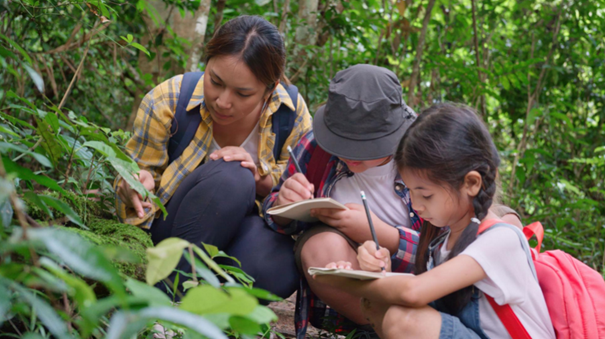
I know of certain schools around the world, not many, but some, that operate on a much more practical foundation.
It often works so that children learn primarily through play and activities outside the classroom.
They work together.
They talk.
They explore.
They discover things.
And they remain much more open to receiving new knowledge.
Children are also grouped according to certain predispositions and strengths.
We are different
Imagine that inside the same elementary school classroom, there sits one student who is, or will become, an exceptional athlete with extraordinary sports abilities.
Next to him sits another student who is naturally drawn toward geography and may later study geographical sciences.
Next to them sits somebody with strong artistic abilities who naturally gravitates toward painting or sculpture.
Then another student may be strongly inclined toward mathematics and physics.
Someone else is into biology.
Someone else toward chemistry.
Someone else toward history.
And all these individuals, with completely different natural strengths and interests, are placed in the same classroom and expected to move through identical educational structures.
Some selection begins later in high school and university, but even then, only partially.
There is simply too much standardization.
Too much emphasis on grades.
Too much emphasis on results.
Too much emphasis on tests and measurements.
Where are the life lessons in all of these theoretical studies
And this is where the core of the problem begins.
Purely theoretical foundations and theoretical subjects often do not provide life lessons, not in elementary school, not in high school, and not even at university. This is where a significant gap begins to appear, the gap between theory and practice.
And this is also where there is enormous room for growth.
There is still a great opportunity to build educational systems that not only teach people how to pass exams, but also help them understand life itself.
This was already recognized by Lucius Annaeus Seneca, and it has likely been recognized by many pedagogues, professors, and education experts.
I am speaking here purely from lived experience, from the perspective of someone who spent more than forty years inside different educational systems and received relatively little practical preparation for life itself.
Much of what I later needed, I had to search for, learn, and build myself. And many times that process was frustrating, painful, difficult, and challenging.
What now
In my opinion, there is too little emphasis on identifying and developing individuals' natural potential.
This constant competition and comparison will eventually have to leave educational systems.
Because only then will it become much easier, healthier, and perhaps even more enjoyable to go to school.
I genuinely do not wish future generations to struggle so intensely with systems that can sometimes become rigid, closed, and, in many situations, unfair to many people.

In time, change will come.
I promise you that, until then, as Gandhi said, we will have to be the change we want in the world.
Seneca knew
Perhaps Seneca understood something almost two thousand years ago that we are still trying to understand today.
Maybe the question was never whether we became educated enough.
Maybe the question was never how many titles we collected, how many schools we finished, or how much knowledge we accumulated.
Maybe the real question is much simpler.
Did we learn how to live?
Because one day, all exams end.
One day, careers end.
One day, titles disappear.
And what remains is only the life we actually lived.