Why Discipline Creates Success
Wherever you look, in structured and goal-oriented environments, you will find the same pattern.
High levels of discipline. Clear structure. No negotiation with reality.
In the police, the military, and special units, discipline is not optional. It is the foundation.
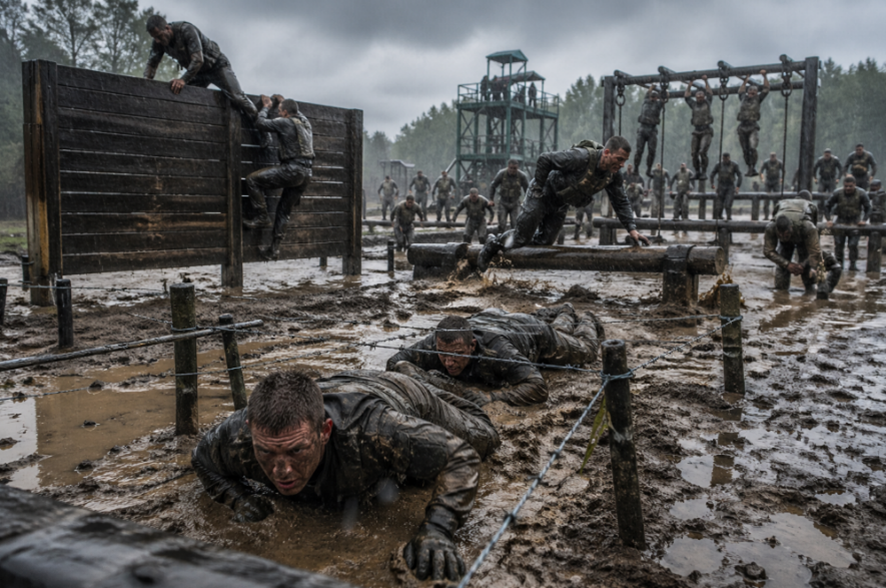
But the same applies elsewhere. In business, in sports, even in art.
No Day Without a Line
Even in ancient times, discipline was understood.
The painter Pliny the Elder is often quoted with the phrase nulla dies sine linea, no day without a line.
What he meant was simple.
Not a single day passes without doing the work.
Not a single day without a stroke of the brush.
That is discipline in its purest form.
Consistency.
Repetition.
Commitment, even when there is no mood, no inspiration, no external pressure.
And this is not limited to art.
Wherever you look in life, if you want results, discipline is required.
Without it, things remain ideas.
With it, things move.
Two Types of Discipline
Some people are naturally disciplined.
They wake up early.
They do the work.
They follow through, almost without thinking.
And then there are people like me.
Formally disciplined.
Not relying on feeling, but on structure.
We plan.
We define what needs to be done.
We break things down into smaller parts.
Tasks are organized.
By content.
By time.
By days, by hours, by deadlines.

Nothing is left vague.
Everything is decided in advance.
That, for me, is real discipline.
Not relying on how you feel in the moment,
but building a system that carries you forward, even when you do not feel like it.
People who operate at a high level do not leave their days to chance.
They organize their time, routines, nutrition, and sleep. Often down to the smallest detail.
The more important the outcome, the higher the level of discipline.
The Discipline I Fought Against
I experienced discipline early.
For four years, I was part of a police high school system that, at the time, was highly structured.
And I will be honest, I did not like it at all.
At fifteen, everything was controlled.
When to wake up. When to sleep. When to brush your teeth. When you could go to the bathroom. How you had to dress.
There were moments when we stood outside in the cold, in tracksuits without shirts.
Sometimes rain, sometimes wind blowing like hell.
The weather did not matter. Your opinion did not matter.
And the more you resisted, the worse it became.
I resisted constantly.
I was always a bit different. I wanted to do things my own way.
From a young age, I fought for my rights. When things weren’t as I wanted, I pushed, argued, and used whatever means I had to regain control.
As I got older, I managed to carve out some of that independence.
But the system was still there. And it did not bend easily.
The worst part came later, during multi-week field training in the police.
That was where the pressure intensified.
Whenever I felt direct provocation or unnecessary pressure from instructors, something in me reacted immediately. Helplessness. Anger. Resistance.
At the same time, I was drawn to the idea of special forces.
I loved physical effort. I believed I could do more than the average person.
But very quickly, one thing became clear….
My Problem With Authority
I had a problem with authority.
When I was nineteen and started working in the police, one of the first notes in my personal file said that I was extremely intelligent, but had problems with authority.
Years later, when I read that, it hurt.
Not because it was wrong. But because I was judged by it, my career progress was slowed.
I always wanted to live by my own rules. My own standards. My own discipline.
And yet, looking back, that same system I resisted gave me something I could not have built on my own at that age.
It gave me discipline.
Real discipline.
Not the kind you talk about.
The kind you live through.
The Discipline I Could Not See In Myself
Interestingly, I never saw myself as a disciplined person.
Others did. They pointed it out.
But in my own mind, it was never enough.
I was constantly pushing for more.
Planning my days. Structuring my time. Trying to execute better, faster, cleaner.
In sports, in work, in study, everything was scheduled.
I preferred to be early rather than late. Prepared rather than uncertain.
Looking back today, I am grateful for that path.
Because it shaped the discipline I have now.
And it is something I pass on to both my children and the people I work with.
Discipline, in its simplest definition, is training yourself to follow rules and standards, with consequences when you do not.
But the real test comes later.
When no one is watching.
When no one is forcing structure on you.
That is when you find out if you truly have it.
If you did not learn discipline early, you can still build it.
But it requires something most people underestimate.
A real decision.
Because discipline is not just behavior.
It is a direction you choose to live by.
| But that direction becomes exponentially harder to hold in an environment that is actively pulling against it, and why a distracted environment makes discipline harder than it needs to be is something most people underestimate until they try to build structure in a chaotic working life. Why a distracted environment makes discipline harder than it needs to be? |
What Discipline Actually Builds
Most people misunderstand discipline.
They see control.
Restriction.
Loss of freedom.
I can understand that struggle, but…
Real discipline does not take freedom away.
It builds it.
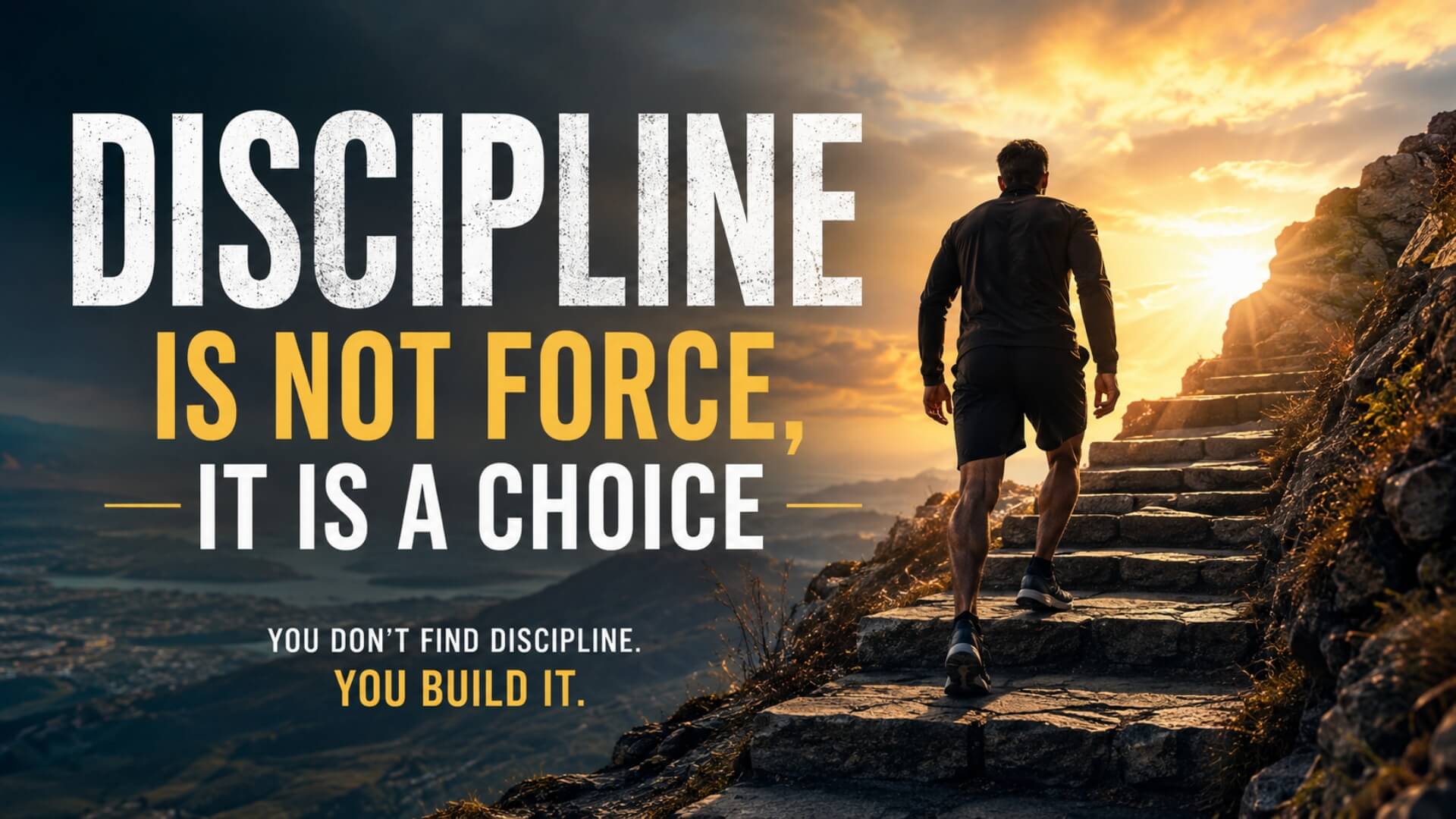
Discipline is not about forcing yourself in the moment.
It is about deciding in advance who you are and how you operate.
When structure is in place, you stop negotiating with yourself every day.
You do not wake up and ask, “Do I feel like it?”
You already decided.
Why Motivation Fails and Discipline Works
This is where most people fail.
They rely on motivation.
On mood.
On energy.
Don’t get me wrong, we all need motivation, but motivation is temporary; it will not get you far. Motivation fades, discipline remains.
At first, it feels unnatural.
Like something external. Something you have to push.
But over time, it shifts. Discipline becomes internal.
Like a muscle, it strengthens with repetition. Not in one dramatic moment, but in small, consistent actions. Once it is built in one area, it starts to spread.
From training to work.
From work to relationships.
From small commitments to larger ones.
And something else happens.
You start to trust yourself.
Discipline Builds Self-Trust
Because you do what you said you would do.
Even when it is uncomfortable.
That is where confidence comes from.
Not from thinking. From evidence.
This is why discipline is deeply connected to self-awareness and self-respect.
You begin to see what you are capable of.
And more importantly, you stop lying to yourself.
Discipline Removes Excuses
People often say they cannot be disciplined.
Discipline Removes Excuses
In most cases, that is not true.
It is not an inability.
It is avoidance.
A protection mechanism.
Because discipline removes excuses.
And once excuses are gone, you are left with responsibility.
And responsibility is heavy.
But it is also where change begins.
Discipline is not punishment.
It is not rigidity.
It is not blind obedience.
| It is also not something that survives unaddressed internal pressure, which is why understanding why stress undermines discipline at the root level matters as much as any system or plan. Why stress undermines discipline at the root level? |
It is a conscious decision to live according to what matters,
even when it is uncomfortable.
And that changes everything.
People Will Judge You for Being Disciplined
I will not lie to you.
If you are a disciplined person, or are becoming one, you already know this.
Not everyone likes it.
The moment you start changing your structure, your habits, your standards, something shifts.
Not only in you, but also in how people see you.
And before anything else, you need to understand one thing clearly.
You define your discipline.
You choose where it applies.
You can decide to be disciplined in training because you want to lose weight.

You can choose to be disciplined with your food to build a better body.
And in other areas, you may choose not to apply that same level of discipline.
At least not at the beginning.
That is fine.
Discipline is not built overnight.
It is built slowly.
Over months. Over the years.
But here is the good part. You don’t have to hurry. You don’t have to do it all at once.
You start small. But start TODAY, not tomorrow. Please do this for me (LOL).
A few training sessions per week.
A plan for next week.
A dream job you always wanted. I don’t know its your life, just don’t hold yourself back. that’s all I’m saying.
Small Actions Create Big Change
Over time something happens.
Slowly but consistently.
You begin to change.
You go further.
You stop certain habits.
You reduce or remove things that no longer serve you.
You gain control.
Not just over your body, but over your decisions.
And at some point, you become the one who leads yourself.
But this is where the shift comes.
Your Growth Makes Other People Uncomfortable
People will notice.
Some will respect it.
A few will even admire it.
But most will not say anything. Your discipline pressures them for not doing it. Of you being better than them. That hurts. Understand that, and it will be easier because people will want to pull you back to their undisciplined life.
Free on the outside, casual, “perfect,” but inside, they know they could do better than drink beer and gossip. They could be like you.
Working on yourself, trying, doing better every day.
And that is the point of life, that tomorrow you will be better than today.
There will be bad days, but you and I will conquer them together. As many times before. But “they” will stay in the same chair, sofa, table as they were years before.
You will lose some friends, you will gain new ones, but what is important is that you will become a new person with new possibilities.
And don’t worry if success doesn’t come fast, your effort is progress itself.
The truth is simple.
Discipline produces results.
Consistency produces results.
Everyone knows this.
But not everyone is willing to live it.
And that is where judgment comes from.
Imagine this.
What Consistency Looks Like Over Time
Today, you cannot walk more than 500 meters.
Two years from now, you run a half-marathon.
Five years from now, a full marathon. And so on.
And then….
Your body changes.
Your energy changes.
Your presence changes.
New, confident, self-sufficient person.
You look younger. Stronger. More alive.
Not because of talent.
But because you showed up, day after day.
A few hours per week.
Structured. Planned. Repeated.
That is all it takes.
But it has to be done.
At specific times.
On specific days.
Without negotiation.
I have seen it. I have done it.
My Half-Marathon Lesson

I trained for a half-marathon for 8 months. And I did it. With my son. which was twice rewarding for me.
And I can tell you this.
If you stay consistent long enough, results are not a possibility.
They are inevitable.

How to Become More Disciplined
At this point, some people may be thinking:
“That sounds good, but how do I actually become more disciplined?”
The answer is simpler than most people expect.
Discipline is not built through massive life changes. It is built through small decisions repeated consistently over time.
Most people fail because they try to change everything at once.
They create unrealistic plans.
They set standards they cannot maintain.
And when they inevitably fail, they conclude they lack discipline.
That is usually not true.
The problem is not discipline.
The problem is the strategy.
Start Smaller Than You Think
One of the biggest mistakes people make is starting too big.
They decide to train six days per week.
Wake up at 5 a.m.
Read fifty books.
Completely change their diet.
And transform their life in thirty days.
The result is predictable.
The plan collapses.
Instead, start with something so small that it almost feels ridiculous.
One workout per week.
Ten minutes of reading.
A short walk after work.
One planned task completed every day.
The goal is not intensity.
The goal is consistency.
Because consistency creates identity.
And identity creates discipline.
Schedule It Before You Need It
Most people rely on memory.
Disciplined people rely on systems.
If something matters, schedule it.
Put it in your calendar.
Define the day.
Define the time.
Define the duration.
Do not leave important things to chance.
The less room you leave for negotiation, the more likely you are to follow through.
That is why successful people often plan their days in advance.
The decision is already made.
All that remains is execution.
Stop Negotiating With Yourself
Many people lose discipline before they even begin.
Not because they fail.
Because they negotiate.
“I’ll do it tomorrow.”
“I’ll start next week.”
“I don’t feel like it today.”
Every negotiation weakens the commitment.
At some point, you have to decide.
Either the task is important or it is not.
If it is important, do it.
Not because you feel motivated.
Because you decided.
The more often you keep promises to yourself, the stronger your self-discipline becomes.
Track Your Progress
Discipline grows when progress becomes visible.
That is why athletes track workouts.
Businesses track performance.
And successful people measure what matters.
You do not need anything complicated.
A notebook.
A calendar.
A simple checklist.
The purpose is not perfection.
The purpose is awareness.
Because what gets measured gets improved.
And when you can see progress, even small progress, it becomes easier to continue.
That momentum is often what carries people through the difficult periods.
Discipline Creates Freedom
Discipline is often seen as a restriction.
In reality, it is the opposite.
Why Discipline Is Freedom
Without discipline, you react.
With discipline, you decide.
Without discipline, you drift.
With discipline, you move.
Every small action, repeated, builds something.
Habits create consistency.
Consistency creates results.
Results create freedom.
And at some point, no one needs to control you anymore.
Because you can lead yourself.