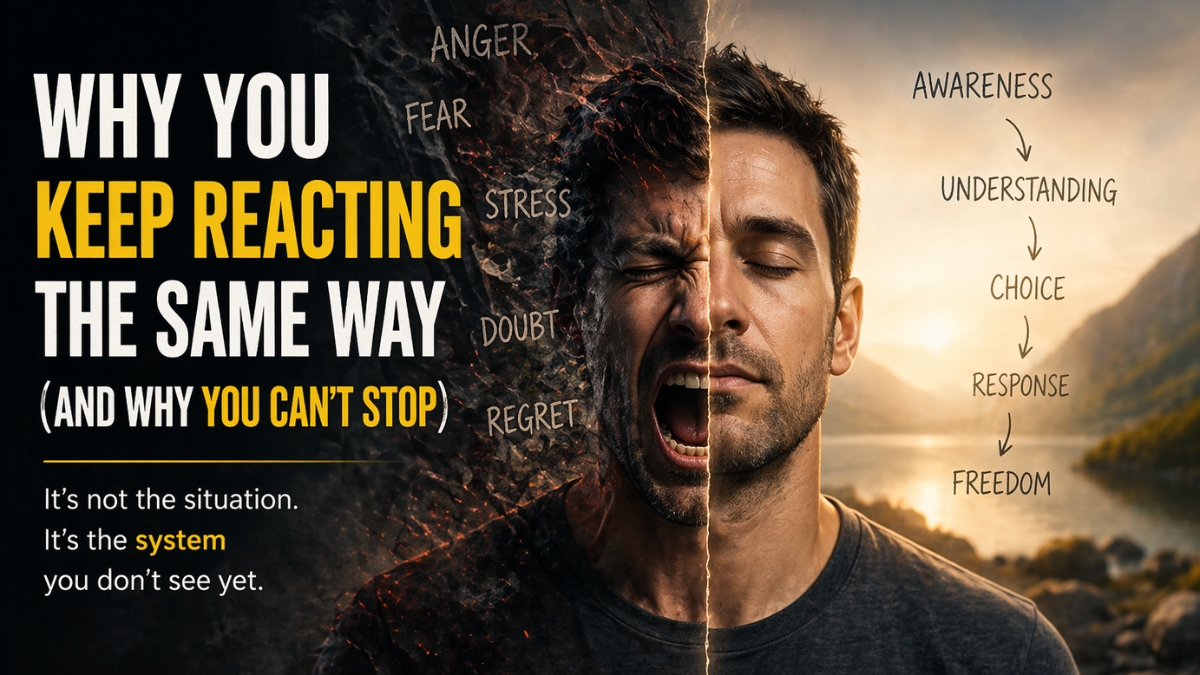
Why You React Emotionally Without Thinking
“People react emotionally before they think because the brain processes perceived threats through the emotional system first. This response is automatic and based on past experiences, patterns, and learned behavior. Only after the reaction does the conscious mind step in to explain or justify what already happened.”
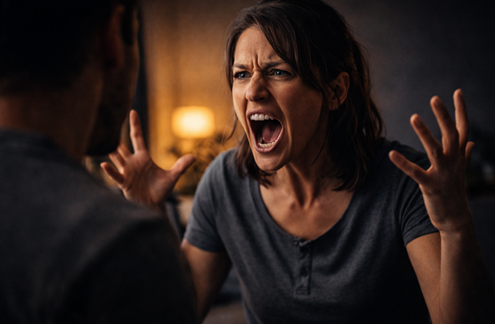
Emotions were once something we largely associated with women.
Men were not supposed to be emotional.
But, even men are increasingly encouraged to show their emotions.
To grieve, to show them,
to face them, and to work through them.
Because this is what enables real growth, evolution, and psychological stability.
Hiding behind outdated beliefs about strength
belongs to the past.
True strength today lies in the ability to understand and use emotions properly.
When emotions are combined with a clear and structured mind, they do not weaken a person; they deepen them. They add weight, meaning, and complexity to life, and that is what makes human experience truly interesting.
“People repeat the same emotional reactions because they are driven by unconscious patterns, not conscious decisions.”
What Emotions Actually Are (Not What You Think)
When we talk about emotions, most people think they understand them.
We all feel.
We all react.
So it seems obvious.
But it is not.
Most people don’t really understand emotions.
They only know how they experience them.
And that is not the same thing.
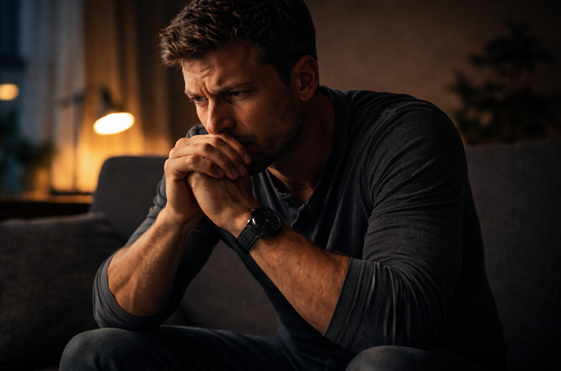
Emotions are basic internal responses to the world
around us. They arise as a combination of perception,
bodily reaction, and interpretation.
They are based on our five senses
(touch, smell, taste, sight, and hearing).
Emotions are not separate from the mind.
They are part of the same system.
The mind gives meaning.
And emotions follow that meaning.
That is why two people can be in the same situation,
and feel something completely different.
Not because the situation is different.
But because their internal system is different
Emotions Are Not Random
“Emotional reactions are automatic responses created by repeated experiences over time. They are not random, but learned patterns that activate quickly when the brain detects a familiar situation or perceived threat.”
From the outside, emotions look unpredictable.
Something happens.
You feel something.
You react.
And it seems random.
But it is not.
If you throw someone into water who doesn’t know how to swim, he or she will panic and probably drown
Not because water is random.
But because he or she doesn’t know how to swim.
The same applies to emotions.
If you don’t have a developed internal system,
Your reactions will be automatic.
Uncontrolled.
Predictable.
Your emotional system is built over time.
Through past experience.
Through repetition.
Through adaptation.
I have seen this in long-term practice.
For example, with tai chi.
Small movements.
Simple exercises.
Nothing dramatic.
But done consistently.
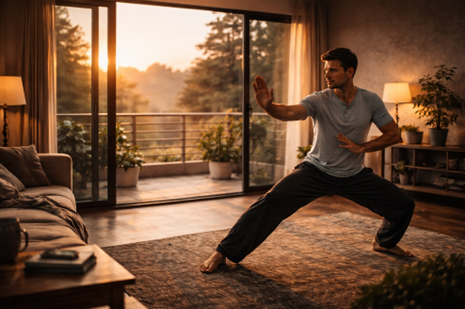
How Repetition Shapes Emotional Patterns
I can prove this to you from a concrete example when I began doing two things simultaneously:
I started learning guitar for 10–15 minutes a day, and at the same time, I began practicing tai chi with a master, focusing on qigong, relaxation, energy, and also working with weapons like the bokken and the stick.
In practice, guitar was daily, while tai chi was one hour a week, with breaks during holidays and some missed weeks, which meant around thirty hours per year, and even less actual weapons training, only about five to seven hours per year.
But the weekly continuity of that training gave real strength, progress, and knowledge. Training once a week, even for fifteen minutes, over a long period, produces enormous results.
In five years, I learned a great deal about martial arts, but with the guitar, I progressed strongly in the first year, then gradually stopped, and today, I practically know nothing anymore.
The same principle applied to the study of sacred scriptures. I group meditation as a part of it, we read the Bhagavad Gita.
A few pages a week. At first, it seemed slow, but after one year, we reached around page 250 with only 40 minutes per week. This shows what consistency can produce: even 5 minutes a day adds up to 30 hours a year, and 15 minutes nearly 100 hours.
The result is simple.
Over time, the system changes.
Balance improves.
Control improves.
Stability improves.
Not instantly.
But inevitably.
The same is true for emotions.
They are trained.
They are shaped.
And what you experience today
is the result of that process.
Why You Fall Back Into Old Emotional Patterns
As you probably know, you never stop doing something that is good for you at once. Usually, you start missing one practice, then two, and in a matter of weeks or months, you stop doing it altogether.
That is involuntary stopping, which has too many bad issues. First, you didn’t choose to stop in advance, so your ego is telling you to quit and that you’re no good. And secondly, you stopped doing something good for you, like exercise, learning a language, walking, running, etc.
So don’t stop like this. If you do stop, do it consciously, planned months in advance. That will give you structure, discipline, and internal confidence that you made this decision consciously and in your best interest.
The question is, do you want to train your emotions? Or do you want them to be on autopilot like it was for decades?
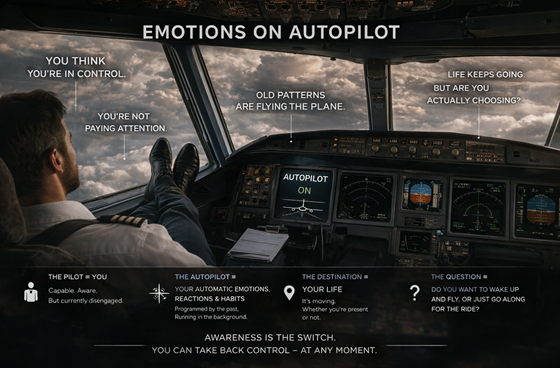
Emotions Are Signals, Not Problems
Most people try to control their emotions.
They try to remove them.
Calm them down.
Suppress them.
Especially uncomfortable ones.
Stress.
Fear.
Inner tension.
They treat them as a problem.
But emotions are not the problem.
They are signals.
They protect us, but because they are uncomfortable, we don’t like them. I get it, I don’t like it either. But if fear saves you from jumping from a cliff or running like hell when a dog chases you, it can save your life.
The problem is when fear comes when it shouldn’t.
So, don’t be angry at the messenger; be angry at your reaction that you haven’t yet set.
Emotions show you something is happening inside.
A belief.
A fear.
A pattern.
If you ignore that signal, nothing changes.
You only delay it; it comes back in another situation. With another person. But with the same intensity.
This is where people get stuck. They try to manage the feeling. Instead of understanding it.
And without understanding, the system stays the same.
The Difference Between Feeling and Reaction
This is where most people lose control.
They think feeling and reaction are the same.
They are not. A feeling appears.
You don’t choose it. It comes.
But the reaction comes after.
And that part is learned. Automatic. But learned.
MY STORY
I experienced this very clearly through working with the body.
At one point, I had noticeable issues with my spine and a general lack of flexibility. It was not dramatic in a single moment, but it was constant. Stiffness, discomfort, and a feeling that something in the body was not functioning as it should.
So, I started very simply. No complex plan, no intensity. Just five minutes of stretching a day, guided by my Tai Chi Master. It felt almost insignificant at the beginning.
Too small to matter.
But I stayed with it.
Day after day, without forcing results, without expecting immediate change.
I won’t lie. Sometimes it was hard to stretch at 5 or 6 a.m.
It was beneficial for my body and meditation, but try stretching at 5 a.m. It was hard sometimes, but it was worth 100%. When my stretching improved by a foot (30 centimeters), the feeling was amazing.
After a year, I said to my Master, “Do you see this?” I showed him my progress, and he smiled and nodded with satisfaction.
He knew all along it was going to happen, and after 5 years, you can imagine how far I’ve come. I was so happy and (honestly) proud of myself because I finally did something I wanted to do for decades.
Now, looking back, something shifted over time. Not in weeks, but in months and years. The body responded. Flexibility improved. Pain reduced. What seemed small became powerful.
This experience showed me something fundamental. Real change does not come from short-term intensity. It comes from slow consistency over time. And it matters even when the effort feels almost too small to count.
It is important to understand that sometimes just showing up matters.
Sometimes you do shitty exercise, but your brain knows it was done.
You outsmart your brain by showing up, thus preventing it from missing an exercise, which can lead to gradually slowing and stopping, as we said earlier.
When you start stretching or working on yourself, especially emotions, your body resists.
It feels uncomfortable.
Tight.
Limited.
The automatic reaction is to stop.
To avoid that discomfort.
But if you stay and work through it, something changes.
Not immediately.
But gradually.
The body adapts. And what was once uncomfortable becomes normal.
Your attention, discipline, and focus are improving steadily.
The same happens with emotional reactions. You feel discomfort. And you react automatically.
You defend.
You withdraw.
You avoid.
But that is not the feeling.
That is the reaction.
And between those two, there is a gap.
“The gap between feeling and reaction is the small moment where awareness can interrupt an automatic response. Although this gap is very short, it allows a person to choose a different reaction instead of following learned emotional patterns.”
Very small. But real. And in that gap, you have a choice. Most people never see it. Because everything is too fast. But when you slow down, even a little, you start to notice it.
And that changes everything.
Because you realize:
You are not your reaction. You learned it. And what is learned can be changed.
Why Emotions Drive Your Behavior More Than Logic
We are emotional beings.
As much as I tried in my career to rely on reason in court proceedings and in working with clients, and even presented this approach to others, I increasingly noticed that my emotions were much stronger than my rational thinking.
My emotions were leading my reasoning, not the other way around, and my actions in court and with clients were often illogical. From my own perspective, they made sense, but from an objective point of view, they did not.
I was often faced with consequences I did not even understand. Only much later did I have to admit to myself that even I, someone who sees himself as rational and grounded in logic, react emotionally. And what is worse, I was not even aware of it.
The Illusion of Rational Thinking
Most people believe they are rational. They think they make decisions based on logic.
They think they analyze first, and then act.
But that is not what actually happens.
In most situations, the decision is already made.
Emotionally.
And only after that, the mind comes in.
To explain it.
To justify it.
To make it look logical.
This is something you can clearly observe. You feel something first. A pull. A resistance. A discomfort. And then you start thinking.
Not to discover the truth. But to support what you already did or react.
I have seen this in my own decisions.
There were situations in business where everything was clear.
Numbers were clear.
The direction was clear.
But something in me resisted. Not strongly. Just enough to hesitate. And instead of saying,
“I don’t want to do this,” I started analyzing. Thinking more. Looking for more information.
But I was not searching for clarity. I was avoiding a feeling and/or reaction.
And then I told myself I needed more time.
But the truth was simple.
The decision was already made.
Emotion first.
Logic second.
How Emotions Override Logic in Real Situations
This becomes very visible in real life. Especially in moments of pressure.
In conflict.
In decisions.
You know what to do.
Logically, it is clear. But it doesn’t feel good.
And that is enough to stop you. I have experienced this many times. For example, with training. There was a period when I stopped for a few months.
Not because I didn’t know I should continue. I knew.
It was clear. But I didn’t feel like it. There was resistance.
And that resistance was stronger than logic.
Why You Keep Repeating the Same Decisions
This is where patterns become undeniable.
You already know what works.
You already experienced it.
And still, you repeat the same behavior, even if it kills you.
You stop. You delay. You avoid.
Then you start again, the same cycle repeating itself, and you recognize that it has happened before, not just once, but multiple times. You build something, you make progress, and then, without a clear reason, you break the rhythm, almost as if something inside you shifts without warning.
And once the rhythm is broken, everything becomes harder. Not because the system disappeared, but because the emotional connection to it changed, and you no longer feel the same way about it. And because you don’t feel the same, you don’t act the same, even though nothing external has really changed.
That is why knowledge is not enough. You can know everything, you can understand the system completely, but if the emotional pattern stays the same, your behavior and results will stay the same.
Until you become aware of that moment.
That exact moment when you feel resistance.
And instead of following it, you see it.
That is where change starts.

Why You Feel Out of Control (And What Is Really Happening Inside You)
There are moments when you feel you are not in control.
You react too fast.
You say something you didn’t plan.
You delay something you know you should do.
And afterward, you don’t understand yourself.
You ask:
“Why did I do that?”
“Why didn’t I act differently?”
And the answer is not simple.
Because what is happening is not on the surface.
It is happening underneath.
Stress and Inner Restlessness
Stress is not just about pressure. It is about how your system responds to pressure. Two people can have the same workload.
One stays calm.
The other feels overwhelmed.
The difference is not the situation.
It is the internal structure.
I noticed this very clearly in periods of high workload.
There were days when I had a lot to do.
Multiple tasks.
Decisions.
Responsibilities.
Nothing unusual. But internally, there was tension, a constant push, a feeling that I needed to move faster and do more. Finish everything. And even when I was working, it didn’t feel like enough, as if something was always missing or unfinished. There was no calm. No satisfaction. Just movement.
And that is inner restlessness. It is not about doing nothing.
It is about not being able to be still, even when you are doing something.
Anxiety and the Fear System
Anxiety is often misunderstood.
People think it is about a specific fear.
But many times, it is not clear. It is just there.
A feeling.
Tension.
Uncertainty.
Pressure without a clear reason.
I experienced this especially in decision-making, in situations where I had to choose a direction, nothing extreme, just everyday decisions. But inside, there was hesitation, a quiet doubt that kept repeating, what if this is wrong, what if I make a mistake. And instead of deciding and moving forward, I stayed in between.
Thinking.
Re-evaluating.
Delaying.
Not because I didn’t know.
But because I didn’t want to feel the consequences of being wrong. That is anxiety.
Not the situation.
But the anticipation of what could happen.
Automatic Thoughts and Patterns
Most of what you think is not new. It is repetition. The same thoughts. The same interpretations. The same conclusions, running again and again without being questioned, because they feel like the truth, even though they are just patterns.
I noticed this clearly when I kept repeating the same cycle: I would stop something, like training or practicing, and immediately the same thoughts would appear. I’ll start tomorrow. I just need a break. I’ll get back to it. And every time it felt different, as if this time it made sense, as if this time it was justified. But it wasn’t. It was the same pattern. Different situation. Same thinking. Same result.
Why You Overreact Faster Than You Think
Reactions are fast.
Very fast.
Before you think, you already act.
Especially in conversations, where you hear something, you feel it, and you respond almost immediately, without any real pause. Immediately.
There are situations where we react instantly, just a sentence, a tone, and we are already inside the reaction. Defending.
Explaining.
Pushing our point.
In that moment, it feels right.
But later, it is clear. We didn’t choose that reaction.
It happened.
Because the system was faster than awareness.
The Illusion of Control
People want control.
They want to feel stable. It gives safety.
But in reality, it is killing them and the people around them. If you are not aware of what you are doing, you will suffer in the long term.
Most of the time, Control is an illusion.
Because what drives behavior is not visible.
It is automatic.
And it runs in the background.
You think you are in control until a situation hits and something shifts. And suddenly, you react, you delay, you avoid, almost automatically. And only afterward, you realize what actually happened. That is when you see it.
You were not in control. The system was.
And until you understand that system, this will keep happening.
Again and again.
Remember: control is about safety. It is The fear behind that is important. Don’t work on more control, work on more of what can give you your sense of safety.
How to Stop Reacting Automatically (Practical Steps)
At this point, one thing should be clear. You are not as in control as you think, not because you are weak, but because your system is running automatically.
Your reactions.
Your decisions. Your patterns.
They are learned, and they repeat without you noticing. The problem is not that you feel; the problem is that you don’t see what is happening when you feel. Because everything is fast.
Too fast.
So you react. And only later, you think about it. Regret it.
If you want to change this, you don’t start with control.
You start with awareness.
Very simple.
But not easy.
You begin by noticing.
In real situations.
When something happens. When you feel something. Pause. Even for a moment. Don’t change anything yet. Just observe. What did you feel?
What was the first reaction?
Where did it go?
Most people skip this.
They want solutions.
Techniques.
Quick fixes.
But without awareness, nothing sticks.
Because you are still inside the same system.
“To stop reacting automatically, start by noticing emotional triggers in real time. Pause briefly, observe what you feel without reacting, and allow the emotion to pass before responding. Repeating this process gradually weakens automatic reactions and builds conscious control.”
Frequently asked question
Emotional reactions happen quickly because the brain prioritizes speed over accuracy. The emotional system responds before conscious thinking to protect you, even when there is no real danger.
Yes, emotional reactions can be changed over time. By increasing awareness and practicing different responses, the brain forms new patterns that replace automatic reactions.
How to Change Your Reactions Over Time
Change comes from small, continued daily practices.
Repeated.
Seen.
Understood.
This is where the process truly starts,
Not when you try to control everything,
But when you finally begin to see what is actually happening inside you,
CLEARLY AND WITHOUT RESISTANCE.
If you recognise this pattern in yourself, the next step is not more reading.
The patterns described in this article do not change through understanding alone. They change through consistent, guided work on the system underneath.
If you are a Founder or CEO who keeps reacting the same way and wants to understand what is actually driving it, a free 20-minute Clarity Call with Coach Mark is the place to start.
No pitch. No pressure. Just clarity on what is happening and where to begin.