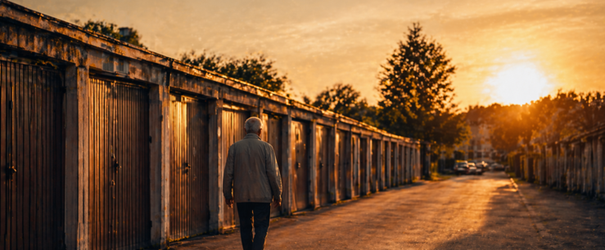
Buddhists believe their breaths in life are numbered
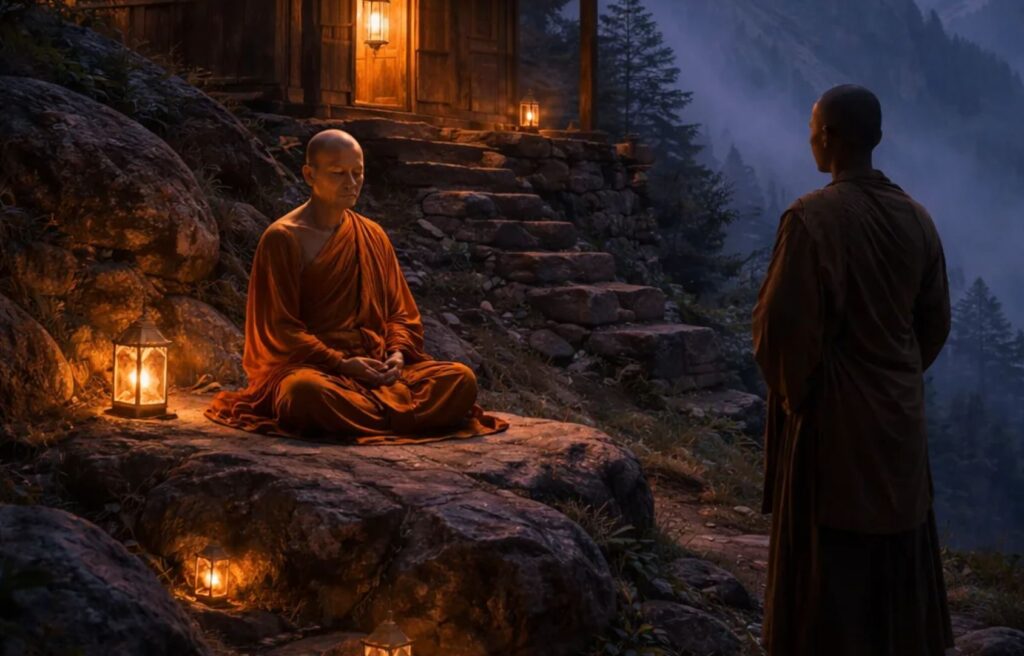
A Buddhist master once felt that his time was coming. He asked his servant to look at the stars and tell him when the right day for his departure would arrive. When the servant answered
Monday, the master calmly accepted it and spent the following days in deep meditation, returning only briefly before finally leaving his body on Monday.
You can read the full story here.
That story stayed with me for years and later became much more personal when I was forced to confront my own mortality through illness, stress, and a brain hemorrhage. The continuation of that journey and how it changed my perception of life can be read here.
Most people don’t want to think about what happens after death; however, it is an important question to ask ourselves. What happens after death, and how to prepare for it?
I don’t know many people who talk about their own death. And they should because they are old. Everybody should talk about death; it shouldn’t be a taboo topic as it is.
Why do people fear thinking of their own death?
Because it forces you to face something you cannot control.
Something you cannot negotiate.
And yet, sooner or later, every single one of us will have to face it. The real question is not what happens after death. The real question is, are you ready for it?
What Happens After Death
What does a story like this even mean?
For most people, it sounds almost unreal. A man decides when he will die at a specific time and postpones it for a few days, then he sits down, stops breathing. This state is called the samadhi state.
Samadhi
In yogic traditions, samadhi is considered a very deep meditative state in which the mind becomes completely still, and the ordinary sense of ego disappears.
The body can become almost motionless, and breathing slows down to the point that a person stops breathing. heart stops, and the body is perfectly still.
In this high conscious state, it is believed to enter a state of profound inner absorption.
Mahasamadhi
Mahasamadhi, however, refers to something even more significant, the conscious and final departure from the body by an enlightened master or advanced yogi. In these traditions, it is believed that certain masters can consciously choose the moment of their death, enter deep meditation, and peacefully leave the physical body.
Why are the states of Samadhi and Mahasamadhi considered so important?
According to Eastern spiritual traditions, if a person reaches a high level of meditative consciousness, they may no longer return to another cycle of birth, commonly referred to as reincarnation.
Samadhi and especially Mahasamadhi are believed to be attainable only by individuals who have reached a very high spiritual level and achieved personal liberation. In yogic traditions, such a person is sometimes referred to as a jivanmukta, meaning a liberated being.
In many Eastern traditions, especially in Buddhism, this is not as strange as it sounds.
Three worlds and three bodies
According to certain Eastern spiritual traditions, there are three worlds and three bodies.
The first is the physical body and the physical world as we know it. This is considered the densest and most material form of existence.
Then there is the astral body and the astral world.
And finally, there is the causal or ideational body together with the causal or ideational world, which is described as the most refined and subtle level of existence.
According to these teachings, every human being exists through all three bodies at the same time. These worlds represent different levels of consciousness and materialization, from the grossest to the finest forms.
It is difficult in such a short text to deeply explain everything that stands behind these concepts, but for a basic understanding and general feeling, this is enough.
According to these traditions, when a person dies, the physical body remains on Earth, while the soul or astral body awakens in the astral world.
After a certain period of time, months or sometimes years, the soul returns again into another physical body. In this way, the cycle between these worlds continues until liberation from reincarnation is achieved.
As mentioned earlier, this requires a higher level of consciousness and spiritual development.
Many of these ideas about the worlds and bodies were described by Paramahansa Yogananda in the Autobiography of a Yogi, a book I highly recommend because it opens completely new areas of thought and exploration.
The astral world can perhaps best be imagined through near-death experiences or out-of-body experiences.
People who go through near-death experiences often describe light, profound peace, and a feeling of wanting to remain there instead of returning to Earth.
Many of those who have had these experiences later describe a complete change in how they see life and reality itself.
The causal or ideational world is described as an even more refined dimension of existence, reached only after liberation from the astral realm.
According to these teachings, this is where the soul gradually merges with the highest forms of universal consciousness, with God, or whatever name one chooses for that universal force that sustains all existence.
Why Most People Are Not Ready to Die
We live in an illusion (maya) that this world is real and that we will live forever. Don’t get me wrong, it is real, but that is not the only reality there is. When we have a bad dream, it feels real, but when we wake up, we know it was a dream. So how come it feels real at the moment of the dream, but then when we wake up, we know it was “just a dream”?
What if one day you wake up and see that the life you live is just another dream?
You must know that you don’t know what you don’t know. And just because you think you know something, it doesn’t make it right or true.
Similarly, when one enters the samadhi state, he or she realizes the real, true self, which opens a whole new world that he or she never knew existed. And that is where our world as we know it ends. That is the border between the worlds (this world and the astral world).
We build lives that feel safe, predictable, controlled. And yet, there is one thing that none of that can protect us from.
I can promise you that – Death will come
Physical death doesn’t care about your plans.
It doesn’t care about your age. It doesn’t care how successful you are.
And still, most people live as if they have unlimited time, as if death is something that happens to others. Older people, sick people, someone else. Not me.
Not today. Not now.
Every day
approximately 150,000 to 174,000 people die worldwide, which means approximately 12 people every minute or 2 per second. And yet we feel not me.
I will be honest here, when I was close to death or when my best friend died at 44 in a motorcycle accident, I wasn’t ready.
We are never ready. So don’t think for a second that you can’t be among 120 people that die every minute or among cca 150.000 people that die every day. You and I are not above the law of nature. And yet most of us act as we are.
I personally only started to seriously think about death in the last 5 years. Before that, for almost 4 years, I was mostly avoiding it, sometimes consciously, but mostly unconsciously. There was always a certain fear in the background, something I didn’t want to fully face.
When Death Becomes Personal – MY STORY OF what happens after death
My path into this topic did not start from curiosity; it started from reality. 9 years ago, doctors discovered that I have a vascular malformation in my head (so-called AVM – arteriovenous malformation). They told me that it can rupture at any time, or maybe never.
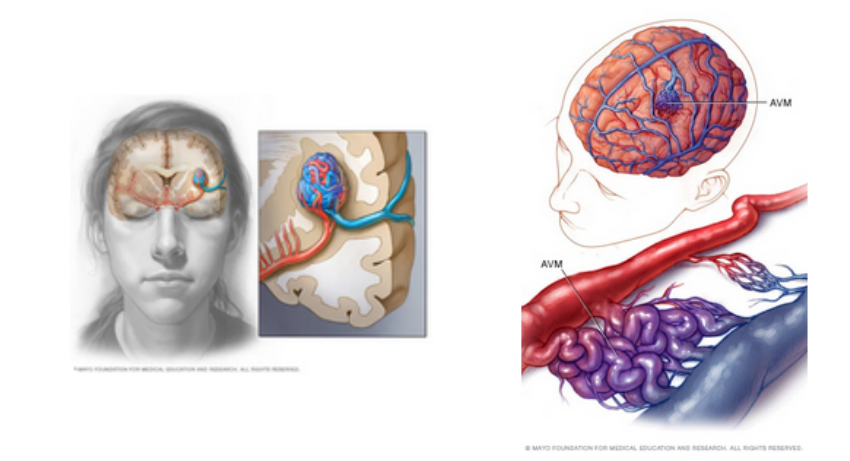
So you live with that uncertainty. You try to stay calm, you go to specialists, even to the best ones, hoping for answers, hoping for control, but control is an illusion.
At one point 5 years ago, that vessel in my head ruptured, and for the first time, I was seriously confronted with my own death, not as an idea or a concept, but as something real, something close. What followed were three operations, and with each one the same question returned: what happens when I die, what happens if this goes wrong?
That is when my perspective started to change. Not because I suddenly became enlightened or understood death, but because I could no longer ignore it.
Death was no longer something abstract; it became personal, and once it becomes personal, you either run from it or start looking at it differently.
I chose, or maybe I was forced, to start looking for answers that weren’t there, and I had to change my life and start living from this perspective.
How to Start Thinking About Death Differently
So where does that leave you? Not in a monastery, not in meditation for hours a day, and not in trying to control the exact moment of your death like the master in the story.
But maybe in something much simpler, and at the same time much harder, to stop avoiding the question of what happens after death. Not as a philosophical idea, not as something you scroll past, but as something that actually concerns you, your life, your decisions, your time.
Because when you start to take that question seriously, something shifts. You begin to see that most of what you worry about is not that important, that most of the pressure you feel is self-created, and that a lot of what you chase gives you distraction, not meaning. And then another question appears.
If I know that one day I will face that moment, if I know that I will have to answer what happens when I die, how do I want to live before that, more honestly, more directly, more in alignment with who I actually am?
There is no perfect answer, there is no certainty, and maybe that is exactly the point. But one thing is clear. You can ignore death, most people do, or you can use it as a reminder, as a direction, as a way to stop wasting time on things that don’t matter. And maybe, just maybe, that is where real life begins.
It is important that you start exploring the question of what happens after death. My own exploration has gone quite far.
I have come across three bodies and their worlds we live in: this world, the astral world, and the ideational world. There are different layers of existence beyond the physical one, and I have reached certain conclusions that I also share on my website. But this is my path. Everyone should continue on their own.
Conclusion
Every person has their own journey, their own way of understanding, their own timing. From my perspective, the only thing that truly matters is that you begin. That you allow yourself to ask the question and not turn away from it.
If you feel that this question is starting to stay with you, then don’t ignore it. Start exploring it. And if you want guidance along the way, you know where to find me.